MARKET RESEARCH REPORT
Singapore Fitness Trackers Market
Insights, Analysis & Forecasts to 2034
Published by GMI Reports | www.gmigreports.com
Executive Summary
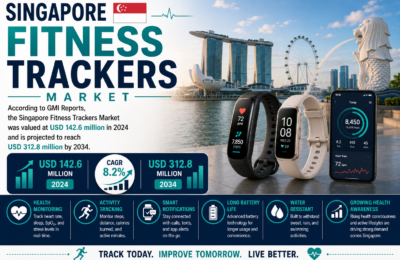
The Singapore fitness trackers market was valued at USD 142.6 million in 2024 and is projected to grow at a compound annual growth rate (CAGR) of approximately 8.2%, reaching USD 312.8 million by 2034, according to GMI Reports. Singapore’s fitness trackers market benefits from the nation’s exceptionally high smartphone penetration, strong disposable income levels, and a distinctive government-driven national health promotion environment that has actively incentivized wearable fitness technology adoption among the general population.
The Singapore government’s National Steps Challenge and broader Healthier SG national health initiative, which has incorporated wearable device data integration into preventive healthcare engagement programs, represents a globally distinctive market driver not commonly observed in other developed fitness tracker markets. This government-led health promotion infrastructure has meaningfully expanded fitness tracker adoption beyond the typical young, fitness-enthusiast demographic into broader population segments including older adults and previously sedentary individuals.
Advanced health monitoring features, including continuous heart rate monitoring, sleep tracking, and increasingly sophisticated biometric sensing capabilities such as blood oxygen saturation and stress level monitoring, continue to drive premium product segment growth. Singapore’s affluent, technology-forward consumer base demonstrates strong willingness to pay for premium-tier devices offering comprehensive health insight capabilities beyond basic activity tracking functionality.
Market Overview
The Singapore fitness trackers market encompasses wrist-worn activity trackers, advanced fitness-focused smartwatches, and specialized fitness monitoring devices including smart rings and clip-on activity sensors. These devices track metrics including step count, heart rate, sleep quality, calorie expenditure, and increasingly advanced biometric indicators, serving both casual health-conscious consumers and dedicated fitness enthusiasts across Singapore’s affluent and health-engaged population.
Singapore’s fitness tracker market is distinguished by its unusually direct government health policy integration, with national health promotion initiatives actively incorporating consumer wearable device data into citizen engagement and incentive programs. This policy environment has created a uniquely supportive demand backdrop for fitness tracker adoption, complementing the strong organic consumer demand drivers observed across other developed Asia Pacific markets including high health consciousness and substantial disposable income availability.
The market benefits from Singapore’s position as a regional retail and technology distribution hub, providing consumers with early access to global fitness tracker product launches and a highly competitive retail environment spanning electronics specialty retailers, telecommunications operator retail channels, and increasingly significant e-commerce platforms. Singapore’s small geographic footprint and dense urban population additionally support efficient last-mile delivery infrastructure that has accelerated e-commerce channel growth for consumer electronics including fitness trackers.
Market Size & Forecast
Market Driving Factors
1. Government-Led National Health Promotion Integration
Singapore’s distinctive National Steps Challenge and broader Healthier SG preventive healthcare initiative have directly incorporated wearable fitness device data into citizen health engagement and incentive programs, creating a uniquely supportive policy environment for fitness tracker adoption. This government health policy integration has meaningfully expanded the addressable consumer base beyond traditional fitness enthusiasts into broader population segments motivated by national health program participation incentives.
2. High Health Consciousness and Disposable Income
Singapore’s affluent population exhibits strong health consciousness combined with substantial disposable income availability, supporting robust demand for both entry-level and premium-tier fitness tracking devices. This combination of health motivation and purchasing power has positioned Singapore as a particularly attractive market for premium fitness tracker and advanced health-focused smartwatch product launches within the broader Asia Pacific region.
3. Advanced Biometric Sensing Technology Adoption
Singapore consumers demonstrate strong receptiveness toward advanced biometric sensing capabilities including continuous heart rate monitoring, sleep stage analysis, blood oxygen saturation measurement, and emerging stress and recovery monitoring features. This technology adoption enthusiasm has supported premium product segment growth and encouraged manufacturers to prioritize Singapore as an early-access market for advanced health sensing feature introductions.
4. Corporate Wellness Program Integration
Singapore’s substantial corporate sector, encompassing both multinational regional headquarters and domestic companies, increasingly incorporates fitness tracker-based employee wellness programs as part of broader corporate health and productivity initiatives. These corporate wellness programs frequently provide subsidized or complimentary fitness tracker devices to employees, representing a meaningful institutional demand channel complementing direct consumer retail purchasing.
5. Aging Population and Preventive Health Monitoring Demand
Singapore’s well-documented demographic aging trend has elevated demand for fitness trackers and health monitoring wearables among older adult consumers seeking preventive health monitoring capability, including fall detection, heart rhythm irregularity detection, and chronic condition management support features. This aging population-driven demand represents an increasingly significant market segment beyond the traditionally dominant younger fitness-enthusiast demographic.
6. Strong Retail and E-commerce Distribution Infrastructure
Singapore’s sophisticated retail and e-commerce distribution infrastructure, combined with its function as a regional technology distribution hub, provides consumers with efficient access to a broad range of both global and regional fitness tracker brands. This well-developed distribution environment, supporting efficient product availability and rapid delivery, continues to support sustained category growth and consumer access to the latest product innovations.
Market Restraining Factors
1. Market Saturation Among Core Fitness Enthusiast Demographics
Singapore’s traditional fitness tracker core demographic of younger, fitness-engaged consumers has achieved relatively high market penetration, limiting incremental new customer acquisition potential within this established consumer segment. Future market growth increasingly depends on continued expansion into previously underpenetrated demographic segments and replacement cycle purchasing rather than fundamentally untapped new customer growth within the core fitness enthusiast population.
2. Data Privacy and Health Information Security Concerns
Growing consumer awareness regarding personal health data privacy, particularly concerning continuous biometric monitoring data collection and its integration with government health program platforms, has generated some consumer hesitancy regarding comprehensive fitness tracker adoption. Manufacturers and government health program administrators continue to address these data privacy concerns through enhanced data protection assurances and transparent data usage policy communication.
3. Smartphone Health App Functionality Substitution
Continued advancement in smartphone-native health and fitness tracking application capabilities, leveraging built-in smartphone sensors, presents a substitution consideration for casual consumers who may consider dedicated fitness tracker devices unnecessary given adequate smartphone-based tracking functionality. This substitution dynamic particularly affects entry-level fitness tracker product segments where smartphone-based alternatives offer reasonably comparable basic functionality without additional device purchase requirements.
4. Device Battery Life and Charging Convenience Limitations
Despite continued technology improvement, fitness tracker battery life and charging convenience limitations, particularly for devices incorporating advanced continuous biometric monitoring features, continue to present usage friction that can affect sustained long-term device usage consistency. This usage friction consideration affects both initial purchase decisions and ongoing device engagement levels among Singapore consumers accustomed to seamless technology experiences.
Market Segmentation
By Product Type
Advanced fitness smartwatches incorporating comprehensive health monitoring and smartphone connectivity features retain the dominant and fastest-growing market share, reflecting Singapore consumers’ strong preference for multi-functional devices combining fitness tracking with broader smartwatch capability. Basic fitness bands continue to experience declining proportional share as consumers increasingly favor more capable advanced devices, while smart rings represent an emerging growth category appealing to consumers seeking discreet, low-profile health monitoring form factors.
By Sensor Type
Heart rate monitoring sensors remain the most prevalent sensor category, now standard across nearly all fitness tracker price tiers. Blood oxygen saturation sensing and advanced cardiac monitoring sensors are exhibiting particularly strong growth, reflecting Singapore consumers’ increasing interest in comprehensive health insight capability extending beyond basic activity and fitness metrics toward genuine health monitoring applications.
By Distribution Channel
Competitive Landscape
The Singapore fitness trackers market features a combination of major global consumer electronics and wearable technology brands with established regional distribution presence, alongside growing competition from Chinese wearable manufacturers offering competitively priced advanced feature sets. Competitive differentiation increasingly centers on health sensing sophistication, ecosystem integration, and design aesthetics.
Consumer Segment Analysis (Within Singapore)
Fitness tracker adoption within Singapore exhibits meaningful variation across age demographics and consumer lifestyle segments, shaped by both organic fitness interest and government health program participation incentives. Younger professional demographics and the rapidly growing older adult health-monitoring segment represent the two most significant consumer categories driving market growth.
Emerging Market Trends
Government Health Program Data Integration Expansion
Singapore’s national health promotion programs continue to expand wearable device data integration capabilities, incorporating an increasingly broad range of compatible fitness tracker brands and models into citizen health incentive program eligibility. This expanding integration trend is expected to further broaden fitness tracker market accessibility and adoption incentive structures across the general population.
Continuous Glucose and Metabolic Health Monitoring Exploration
Growing consumer and healthcare provider interest in continuous metabolic health monitoring, including glucose level tracking capability, is driving early-stage exploration of expanded biometric sensing capability within Singapore’s fitness tracker market. While regulatory and technology maturity considerations continue to shape the pace of this category’s development, metabolic health monitoring represents a significant potential growth vector for advanced fitness tracker products.
AI-Powered Personalized Health Insight Generation
Fitness tracker manufacturers are increasingly incorporating artificial intelligence-driven personalized health insight and recommendation generation capabilities, moving beyond raw biometric data presentation toward actionable, individualized health and fitness guidance. This AI-driven personalization trend is becoming an increasingly important product differentiation factor within Singapore’s sophisticated, technology-forward consumer market.
Smart Ring and Discreet Wearable Form Factor Growth
Growing consumer interest in discreet, low-profile health monitoring form factors, particularly smart rings, is gaining traction among Singapore consumers seeking comprehensive health tracking capability without the visible presence of traditional wrist-worn devices. This trend reflects evolving consumer preferences regarding wearable technology aesthetics and all-day wearability comfort considerations.
Corporate and Insurance Partnership Program Expansion
Singapore insurance providers and corporate employers continue to expand fitness tracker-linked wellness incentive programs, offering premium discounts or wellness rewards tied to demonstrated physical activity levels recorded through wearable devices. This insurance and corporate partnership trend is creating additional institutional demand channels that complement direct consumer retail purchasing and government health program-driven adoption.
Key Companies in the Singapore Fitness Trackers Market
-
Apple Inc.
-
Garmin Ltd.
-
Samsung Electronics
-
Xiaomi Corporation
-
Fitbit (Google)
-
Huawei Technologies
-
Amazfit (Zepp Health)
-
WHOOP Inc.
-
Oura Health
-
Polar Electro
-
Regional and Value Brand Distributors
Report Target Audience
-
Wearable Technology and Consumer Electronics Manufacturers
-
Retailers and E-commerce Platform Operators
-
Investment and Private Equity Firms
-
Government Health Promotion and Public Policy Agencies
-
Insurance Providers and Corporate Wellness Program Administrators
-
Healthcare and Preventive Medicine Organizations
-
Management and Strategy Consultants
-
Academic and Digital Health Research Institutions
Market Segmentation Summary
By Product Type
-
Basic Fitness Bands
-
Advanced Fitness Smartwatches
-
Smart Rings & Other Wearables
By Sensor Type
-
Heart Rate Monitoring
-
Sleep Tracking
-
SpO2/Blood Oxygen Sensors
-
GPS/Location Tracking
-
ECG/Advanced Cardiac Sensors
By Distribution Channel
-
Electronics Specialty Retailers
-
Online/E-commerce
-
Telecommunications Operator Retail
-
Department Stores & Other
By Consumer Segment
-
Young Professionals (25–40)
-
Government Health Program Participants
-
Older Adults (55+)
-
Students & Young Adults (18–24)
-
Corporate Wellness Program Recipients
About GMI Reports
GMI Reports is a premier market intelligence and research organization providing data-driven insights and strategic analysis across global consumer electronics, digital health, and wearable technology markets. Our research empowers manufacturers, retailers, and investors to navigate the evolving fitness tracker landscape with confidence. For the Singapore Fitness Trackers Market report and related research, visit www.gmigreports.com or contact our research team for customized intelligence solutions.
www.gmigreports.com