MARKET RESEARCH REPORT
Brazil Dental Equipment Market
Insights, Analysis & Forecasts to 2034
Published by GMI Reports | www.gmigreports.com
Executive Summary
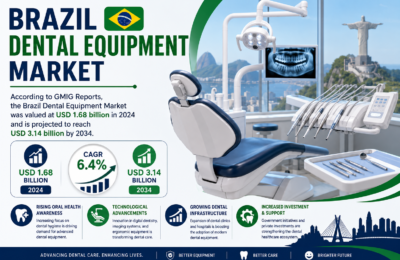
The Brazil dental equipment market was valued at USD 1.68 billion in 2024 and is projected to grow at a compound annual growth rate (CAGR) of approximately 6.5%, reaching USD 3.14 billion by 2034, according to GMI Reports. Brazil represents Latin America’s largest and most strategically significant dental equipment market, reflecting the country’s position as home to the world’s largest registered dentist population, an exceptionally beauty-conscious consumer culture with strong dental aesthetics demand, and a well-developed domestic dental manufacturing and export industry recognized globally for competitive product quality.
Brazil’s dental equipment market is distinguished by several unique characteristics relative to international peers, most notably the country’s extraordinary density of registered dental professionals, which exceeds 380,000 practitioners and continues to grow through Brazil’s extensive network of dental faculties. This large professional base generates substantial and continuous dental equipment demand across clinic establishment, technology upgrade, and replacement purchasing cycles across every market segment.
Growing demand for cosmetic and aesthetic dental procedures, including teeth whitening, veneers, and clear aligner orthodontics, reflects Brazil’s globally renowned beauty culture and consumer willingness to invest in smile aesthetics. This aesthetic dentistry demand has elevated digital dentistry technology adoption, particularly intraoral scanners, CAD/CAM milling systems, and digital imaging equipment, as practitioners seek to deliver premium aesthetic outcomes with improved precision and efficiency.
Market Overview
The Brazil dental equipment market encompasses diagnostic imaging equipment including dental X-ray and cone beam CT systems, dental chairs and delivery units, handpieces and instruments, dental lasers, digital impression and CAD/CAM systems, sterilization equipment, and dental laboratory equipment. The market serves private dental clinics, public health dental service centers, dental specialty chains, dental schools, and hospital dental departments across Brazil’s diverse geographic and socioeconomic healthcare landscape.
Brazil’s dental market structure reflects the country’s dual public-private healthcare system, with the Sistema Único de Saúde (SUS) providing public dental care access through its extensive Brazil Smiling Program network of public oral health centers, while a large and commercially sophisticated private dental sector serves the substantial population with private health insurance or out-of-pocket payment capacity. These two sectors present distinct equipment demand profiles, with private practice and aesthetic dental chain operations driving premium technology adoption and public sector facilities representing volume demand for durable, cost-effective standard equipment categories.
Brazil’s domestic dental equipment manufacturing sector, concentrated primarily in São Paulo State, represents a globally recognized production base for competitive dental equipment including dental chairs, X-ray units, sterilization equipment, and handpieces. Brands including Dabi Atlante, Gnatus, and Saevo have established significant domestic market positions and growing export reputations, providing Brazilian practitioners with domestically manufactured alternatives to imported equipment across multiple product categories.
Market Size & Forecast
Market Driving Factors
1. World’s Largest Registered Dentist Population
Brazil’s extraordinary concentration of registered dental professionals, exceeding 380,000 practitioners and growing annually through the country’s extensive dental faculty network, generates continuous and substantial dental equipment demand across clinic establishment, equipment upgrade, and replacement purchasing cycles. This professional base provides the dental equipment market with a uniquely large and continuously expanding domestic customer population relative to Brazil’s total population size.
2. Strong Aesthetic and Cosmetic Dentistry Culture
Brazil’s globally recognized beauty consciousness and consumer investment in personal appearance creates exceptional demand for aesthetic dental procedures including teeth whitening, ceramic veneers, clear aligner orthodontics, and implant-supported dental aesthetics. This aesthetic dentistry demand intensity drives premium digital dentistry technology adoption, as practitioners invest in intraoral scanning, CAD/CAM, and digital photography equipment to deliver high-quality aesthetic outcomes efficiently.
3. Expanding Dental Implant and Oral Surgery Market
Brazil has emerged as one of the world’s most significant dental implant markets by volume, supported by a combination of high patient demand, competitive implant pricing from domestic manufacturers, and the country’s large pool of trained implantology specialists. This implant market strength drives associated equipment demand including surgical handpieces, imaging systems for implant planning, and guided surgery technology across both private specialist practice and increasingly cost-competitive implant clinic chain settings.
4. Digital Dentistry Technology Adoption Acceleration
Accelerating adoption of digital dentistry technologies including intraoral scanners, cone beam computed tomography, CAD/CAM chairside milling, and digital smile design software is driving meaningful premium equipment segment growth among Brazilian dental practitioners seeking to enhance clinical capability, workflow efficiency, and patient communication quality. Technology adoption is particularly pronounced among younger practitioners and dental specialty chains positioned around premium digital workflow service differentiation.
5. Brazil Smiling Program and Public Oral Health Infrastructure
Brazil’s national oral health policy, implemented through the Brazil Smiling Program, has established an extensive network of public oral health centers providing basic dental care access across previously underserved populations. This public infrastructure generates substantial and ongoing dental equipment demand for standard equipment categories within the federal and state government procurement channel, providing a stable institutional demand base complementing private market growth.
6. Growing Dental Specialty Chain and Group Practice Development
Rapid expansion of private dental specialty chain and dental group practice business models, including technology-focused aesthetic dental chains and cost-competitive implant clinic networks, is driving consolidated equipment purchasing decisions at chain level with greater emphasis on technology standardization, digital workflow capability, and brand-level service differentiation that supports premium equipment adoption across multiple clinic locations simultaneously.
Market Restraining Factors
1. Currency Depreciation and Import Cost Exposure
Brazil’s historical pattern of Real depreciation against major currencies, particularly the US Dollar and Euro in which most imported premium dental equipment is denominated, creates substantial import cost pressure that elevates equipment pricing in local currency and constrains premium technology adoption among cost-sensitive practitioner segments. Currency volatility introduces purchasing timing uncertainty and can compress distributor margins when exchange rate movements cannot be fully passed through to practitioners.
2. High Import Tariffs and Tax Burden
Brazil’s complex tax structure, encompassing federal import duties, ICMS state tax, PIS, COFINS, and other levies applicable to imported dental equipment, creates a substantial cumulative tax burden on imported product categories that can effectively double the cost of imported dental equipment relative to pre-import manufacturer pricing. This tax environment provides meaningful competitive protection for domestic Brazilian dental equipment manufacturers while significantly constraining premium imported equipment accessibility for cost-conscious practitioners.
3. Public Healthcare Budget Constraints
Fiscal pressures on Brazil’s public healthcare budget, including the SUS dental care program funding, can moderate public sector dental equipment procurement investment, particularly during economic contraction periods that reduce federal and state government revenue available for healthcare capital expenditure. These public budget constraints create demand volatility within the institutional procurement market segment that constrains overall market growth predictability.
4. Regional Healthcare Infrastructure Disparity
Significant regional disparity in healthcare infrastructure development between Brazil’s prosperous southeastern states and the less economically developed northern and northeastern regions constrains dental equipment market penetration beyond established major metropolitan markets. Many rural and smaller urban areas across less developed regions lack the practitioner density and patient purchasing power necessary to support premium equipment investment returns, limiting total addressable market depth.
Market Segmentation
By Equipment Type
Dental chairs and delivery units retain the leading equipment category market share, reflecting their foundational role in every dental practice setup and ongoing replacement demand across the large Brazilian practitioner base. CAD/CAM and digital dentistry systems represent the fastest-growing equipment category, driven by accelerating aesthetic and implant dentistry digital workflow adoption and decreasing technology price points improving accessibility across a broader range of practice types.
By End-User
Private dental clinics retain the dominant end-user market share, reflecting the large and commercially sophisticated private dental practice sector as the primary driver of premium equipment adoption. Dental specialty chains are the fastest-growing end-user category, as consolidated multi-location chain operators deploy capital at scale across new location openings and technology standardization programs supporting significant equipment purchase volumes.
By Technology
Competitive Landscape
The Brazil dental equipment market features a combination of well-established domestic manufacturers with strong national distribution networks and competitive pricing advantages given tax structure benefits, international premium dental equipment brands with Brazilian distributor partnerships, and global dental conglomerates operating local subsidiary distribution. Competitive positioning varies significantly across product categories based on domestic manufacturing capability and import tax structure.
Regional Analysis (Within Brazil)
Dental equipment market activity within Brazil exhibits substantial concentration in the Southeastern region, reflecting the geographic concentration of Brazil’s private dental practice market, dental manufacturing cluster, and the country’s wealthiest consumer population. São Paulo State alone accounts for the largest share of both dental equipment consumption and domestic production activity.
Emerging Market Trends
Cone Beam CT Adoption for Implant and Orthodontic Planning
Rapid expansion of cone beam computed tomography adoption within Brazilian dental practices, driven by growing implant dentistry volumes and clear aligner orthodontic treatment planning requirements, is significantly accelerating the imaging equipment market segment. Decreasing CBCT system entry prices and growing specialist practitioner familiarity with CBCT-supported treatment planning protocols are supporting broader adoption beyond specialist referral centers toward general dentistry practices with substantial implant and orthodontic case volumes.
Dental Tourism and Premium Aesthetic Clinic Development
Brazil’s established and growing dental tourism sector, attracting international patients seeking competitive pricing for implant and aesthetic dental procedures relative to US, European, and other international market pricing, is supporting premium clinic facility and technology investment by dental practices positioning themselves for international patient attraction. This dental tourism dynamic creates meaningful demand for international-standard digital dentistry technology among premium São Paulo and Rio de Janeiro aesthetic dental practices.
Dental Subscription and Financing Model Innovation
Growing availability of equipment financing through specialized healthcare equipment leasing programs and manufacturer-affiliated financing facilities is improving premium dental technology accessibility for established practices previously constrained by upfront capital investment considerations. These financing models are enabling faster technology upgrade cycles and supporting broader digital dentistry adoption across a wider range of Brazilian dental practice scale and economic profile categories.
Domestic Manufacturer Digital Dentistry Product Development
Brazilian domestic dental equipment manufacturers are increasingly investing in digital dentistry product development, including intraoral scanner development and CAD/CAM system introduction, seeking to provide domestically manufactured digital dentistry alternatives at competitive price points relative to imported international brand systems. This domestic digital product development reflects Brazilian manufacturers’ strategic recognition of the digital transition’s importance to long-term market relevance.
Tele-Dentistry and Remote Consultation Integration
Growing adoption of tele-dentistry consultation platforms and remote monitoring applications within Brazilian dental practices, supporting patient screening, post-treatment monitoring, and orthodontic aligner progress assessment without physical clinic visits, is creating demand for compatible imaging and digital capture equipment integration within practice technology infrastructure investments.
Key Companies in the Brazil Dental Equipment Market
-
Dabi Atlante (Gnatus Group)
-
Gnatus
-
Saevo
-
KaVo Kerr (Envista Holdings)
-
Dentsply Sirona
-
Planmeca
-
Straumann Group (Brazil)
-
Align Technology (Invisalign Brazil)
-
Carestream Dental
-
3M Dental Division
-
Nobel Biocare (Brazil Operations)
Report Target Audience
-
Dental Equipment Manufacturers and Distributors
-
Dental Specialty Chain Operators
-
Investment and Private Equity Firms
-
Government Health Ministry and SUS Procurement Agencies
-
Dental School and Academic Institution Administrators
-
Healthcare Equipment Financing Companies
-
Management and Strategy Consultants
-
Academic Researchers in Dental Public Health and Oral Care
Market Segmentation Summary
By Equipment Type
-
Dental Chairs & Delivery Units
-
Imaging & Diagnostic Equipment
-
Handpieces & Instruments
-
CAD/CAM & Digital Dentistry Systems
-
Sterilization Equipment
-
Dental Lasers & Other Equipment
By End-User
-
Private Dental Clinics
-
Dental Specialty Chains
-
Public Oral Health Centers
-
Dental Schools
By Technology
-
Conventional/Analog
-
Digital/Technology-Integrated
By Region (Within Brazil)
-
São Paulo State
-
Rio de Janeiro State
-
Minas Gerais State
-
South (PR, SC, RS)
-
Northeast
-
Other Regions
About GMI Reports
GMI Reports is a premier market intelligence and research organization providing data-driven insights and strategic analysis across global healthcare, medical devices, and dental markets. Our research empowers manufacturers, distributors, and investors to navigate the evolving dental equipment landscape with confidence. For the Brazil Dental Equipment Market report and related research, visit www.gmigreports.com or contact our research team for customized intelligence solutions.
www.gmigreports.com
© 2025 GMI Reports. All Rights Reserved. Unauthorized reproduction or distribution is strictly prohibited.