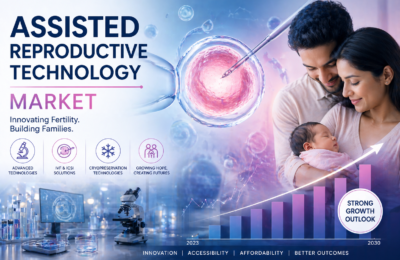
Assisted Reproductive Technology Market Overview
The global assisted reproductive technology market was valued at approximately USD 34.8 billion in 2024 and is projected to reach USD 106.4 billion by 2035, registering a CAGR of 10.6% during the forecast period. The market encompasses all fertility treatments in which eggs or embryos are handled outside the body — including IVF, ICSI, IUI, embryo cryopreservation, preimplantation genetic testing, donor programs, and fertility preservation — serving the estimated 186 million infertile individuals worldwide.
ART has transformed from a pioneering specialist procedure into a mainstream healthcare service over four decades since Louise Brown’s landmark birth in 1978. Today, more than 8 million babies have been born via ART globally, and the market is being propelled by rising infertility prevalence, expanding insurance coverage, AI-powered clinical breakthroughs, and structural demand from delayed parenthood trends and LGBTQ+ family building.
Analyst Headline: The ART market is transitioning from a specialist medical niche to a mainstream healthcare category. The convergence of AI-powered clinical optimization, expanding insurance coverage, demographic imperatives of delayed parenthood and declining fertility, and the global fertility preservation trend creates a decade-long structural growth opportunity. Companies and investors that position strategically in the 2025–2028 window will capture disproportionate value.
Global Infertility Burden & ART Penetration
| Region | Infertile Population | Prevalence | ART Penetration | 2024 Market Size |
|---|---|---|---|---|
| North America | 14.2 Million | 14.8% | High (~15%) | $11.76B |
| Europe | 24.6 Million | 16.2% | High (~18%) | $9.24B |
| Asia-Pacific | 82.4 Million | 17.4% | Low-Moderate (~4%) | $8.36B |
| Latin America | 22.8 Million | 16.8% | Low (~2%) | $2.78B |
| Middle East & Africa | 28.4 Million | 15.2% | Very Low (<1%) | $1.98B |
| GLOBAL TOTAL | 186.0 Million | 15.9% | ~5.4% | $34.80B |
Key Insight: The global ART penetration rate of approximately 5.4% represents a massive treatment gap. Even in the most ART-advanced markets (Denmark: ~10% of births from ART; Israel: ~5%), penetration is well below the theoretical maximum. In emerging markets like India, China, and Brazil, penetration rates below 2% represent the most significant volume expansion opportunity in global reproductive medicine.
Global Assisted Reproductive Technology Market Size & Forecast
The assisted reproductive technology market demonstrated consistent growth through 2018–2024, with a temporary COVID-19 contraction in 2020 (clinic closures, procedure deferrals) followed by the strongest recovery period in the market’s history. The pandemic paradoxically accelerated structural trends: delayed parenthood, mental health awareness driving fertility preservation, and digital-health integration in fertility care.
Historical Market Data (2018–2024)
| Year | Market Size (USD Bn) | YoY Growth | Key Milestone |
|---|---|---|---|
| 2018 | $19.4B | — | CRISPR enters fertility research; AI embryo selection pilots begin |
| 2019 | $22.1B | +13.9% | PGT-A adoption expands; social egg freezing mainstream; PE investment surges |
| 2020 | $20.8B | -5.9% | COVID-19 clinic closures; 60-day cycle pause; telehealth ART launches |
| 2021 | $24.6B | +18.3% | Post-pandemic recovery; record IVF cycles; employer fertility benefits expansion |
| 2022 | $28.4B | +15.4% | AI-embryo selection commercialized; Asia-Pacific boom; IVIRMA global expansion |
| 2023 | $31.8B | +12.0% | PGT-A standard of care; vitrification dominates; China ART policy liberalization |
| 2024E | $34.8B | +9.4% | Automation in embryo culture; GLP-1/fertility intersection emerges |
Market Forecast (2025–2035)
| Year | Market Size (USD Bn) | YoY Growth | Primary Forecast Driver |
|---|---|---|---|
| 2025F | $38.5B | +10.6% | IVF mandate expansion; China ART subsidies; AI adoption scaling |
| 2026F | $42.6B | +10.6% | Next-gen PGT platforms; Fortune 500 fertility benefits expand; South Asia boom |
| 2027F | $47.1B | +10.6% | Automated IVF laboratory systems commercial scale; male fertility tech wave |
| 2028F | $52.2B | +10.8% | Mitochondrial replacement therapy regulatory advance; IVG early clinical trials |
| 2030F | $64.0B | +10.7% | Personalized AI stimulation protocols; Asia-Pac volume exceeds North America |
| 2032F | $77.8B | +10.2% | Mature market consolidation in North America; emerging market acceleration |
| 2035F | $106.4B | +11.1% | USD 100B+ milestone; ART mainstream healthcare globally |
Product Segmentation Analysis
The assisted reproductive technology market is segmented by product into ART pharmaceuticals, equipment & devices, fertility preservation, preimplantation genetic testing, donor programs & surrogacy, and fertility diagnostics. IVF/ICSI clinical procedures dominate by revenue, while fertility preservation and genetic testing lead by growth rate.
Market Share by Product Segment (2024)
| Product Segment | Revenue (2024) | Market Share | CAGR 2025–35 | Growth Stage |
|---|---|---|---|---|
| IVF/ICSI Procedures | $13.30B | 38.2% | 9.8% | Growth |
| ART Pharmaceuticals | $8.70B | 25.0% | 8.4% | Growth |
| ART Equipment & Devices | $5.22B | 15.0% | 11.2% | High Growth |
| Fertility Preservation | $3.48B | 10.0% | 18.4% | Very High Growth |
| Preimplantation Genetic Testing | $2.09B | 6.0% | 16.8% | Very High Growth |
| Donor Programs & Surrogacy | $1.39B | 4.0% | 12.4% | High Growth |
| Fertility Diagnostics | $0.61B | 1.8% | 13.6% | High Growth |
| TOTAL | $34.80B | 100% | 10.6% | — |
ART Pharmaceuticals — Revenue Foundation
ART pharmaceuticals (USD 8.70B; 25.0% share) encompass the complex hormonal protocols used in IVF cycles — representing 30–50% of total procedure cost. Gonadotropins (FSH/LH) at USD 4.20B are the largest sub-category, led by Merck KGaA’s Gonal-f and Organon’s Puregon. The approaching patent expiration of originator gonadotropins is catalyzing a biosimilar wave — biosimilar FSH products are capturing 20–35% market share in Europe and gaining FDA clearance in the US, with 18.4% CAGR for the biosimilar gonadotropin sub-segment.
Fertility Preservation — Fastest Growing Category
Fertility preservation (USD 3.48B; 18.4% CAGR) represents the highest-growth product category, driven by two distinct demand streams. Medical preservation for oncology patients (breast, gynecologic, hematologic cancers) accounts for USD 840M, while elective social egg freezing at USD 1.68B — growing at 22.4% CAGR — has transitioned from a controversial fringe practice to a mainstream reproductive health service. Major corporate employers including Apple, Facebook, Google, and Salesforce provide egg freezing as an employee benefit (USD 5,000–30,000 per cycle), expanding access beyond traditional high-income demographics.
Preimplantation Genetic Testing — Clinical Gold Standard
PGT (USD 2.09B; 16.8% CAGR) has evolved from a specialist procedure to broadly adopted standard of care. PGT-A (USD 1.48B) uses next-generation sequencing to screen embryos for chromosomal abnormalities before transfer, improving live birth rates by 15–25% per transfer and adopted in ~45% of US IVF cycles. Non-invasive PGT (niPGT) — analyzing cell-free DNA in spent culture medium without embryo biopsy — is the emerging frontier, with 80–90% concordance with conventional biopsy approaches currently and multiple companies racing toward clinical validation.
Procedure & Application Segmentation
Global IVF Cycle Volume by Geography (2024)
| Geography | Annual IVF Cycles | Avg. Revenue/Cycle | Live Birth Rate/Transfer | Insurance Coverage |
|---|---|---|---|---|
| United States | ~450,000 | $15,000–22,000 | 40–45% | Partial: 20 states + employer benefits |
| Europe (EU27) | ~600,000 | $4,000–12,000 | 35–42% | Variable; high in Scandinavia, France |
| Japan | ~180,000 | $4,000–6,000 | 30–35% | Government subsidy since 2022 |
| China | ~350,000 | $3,500–6,000 | 32–38% | Pilot city programs; national framework forming |
| India | ~250,000 | $2,500–5,000 | 32–40% | Primarily out-of-pocket; limited private insurance |
| Australia | ~90,000 | $8,000–14,000 | 38–44% | Medicare subsidy (AUD 2,900/cycle) |
| GLOBAL TOTAL | ~2,300,000 | ~$8,000 avg | ~37% | ~28% globally insured |
LGBTQ+ Family Building — Fastest-Growing Demand Segment
LGBTQ+ family building represents one of the fastest-growing patient segments, driven by expanding legal recognition of same-sex parenting rights (now legal in 36+ countries), growing social acceptance, and ART pathways designed specifically for LGBTQ+ family structures. Unlike medical infertility, LGBTQ+ individuals seek ART for structural reasons — making this a distinct, high-commitment demand segment independent of infertility prevalence trends. Reciprocal IVF (ROPA) for female same-sex couples and gestational surrogacy + donor egg IVF for male same-sex couples (USD 80,000–200,000+ in the US) represent the primary high-value pathways.
End-User Segmentation Analysis
Fertility Clinic Landscape
| Clinic Category | Global Count | Revenue Share | Purchasing Behavior |
|---|---|---|---|
| Large Network/Chain (PE-backed) | ~400 networks (8,000+ locations) | 42% | Centralized procurement; vendor partnerships; AI-standardized protocols |
| Independent Specialist (Premium) | ~3,500 globally | 28% | Physician-led decisions; early innovation adoption; academic affiliation |
| Hospital-Based Fertility Departments | ~2,200 globally | 18% | Hospital procurement processes; insurance-integrated; formulary-driven |
| Small/Mid-Size Independent | ~12,000 globally | 12% | Price-sensitive; distributor-dependent; technology lag |
Patient Demographics — The ART Consumer
| Patient Segment | Primary ART Need | Average Spend/Cycle | Market Implication |
|---|---|---|---|
| Advanced Maternal Age (35+) | IVF + PGT-A; donor eggs | $18,000–35,000 | Drives PGT-A growth; premium service demand; repeat cycles |
| Male Factor Infertility | ICSI; surgical sperm extraction | $12,000–20,000 | ICSI add-on market; sperm DNA testing growth |
| LGBTQ+ Female Couples | Donor sperm IUI/IVF; ROPA IVF | $5,000–25,000 | Fastest-growing new segment; advocacy-driven |
| LGBTQ+ Male Couples | Gestational surrogacy + donor egg IVF | $80,000–200,000 | Highest-value segment; legal complexity |
| Cancer/Medical Preservation | Urgent egg/embryo/sperm banking | $8,000–18,000 | Growing with cancer survival rates; employer benefit driven |
| Social Egg Freezers | Stimulation + oocyte vitrification | $10,000–20,000 | 18.4% CAGR; employer benefit normalization; massive untapped |
Growth Drivers & Market Dynamics
- Rising Global Infertility Prevalence — Structural & Irreversible DemandGlobal infertility is increasing across multiple dimensions. The average age of first childbirth has risen consistently in all OECD countries (27.3 years in the US; 30.7 years in Japan). A landmark 2022 meta-analysis confirmed sperm concentration in Western countries declined 51.6% between 1973 and 2018 — accelerating. Obesity (now affecting 13% of adults globally) drives anovulatory infertility and reduced sperm quality. Environmental endocrine disruptors (PFAS, BPA, phthalates) are structural contributors to rising infertility burden.
- Expanding Insurance Coverage & Employer Fertility Benefits20 US states have enacted IVF coverage mandates (covering ~58% of commercially insured population). Federal Fertility Treatment Access Act would add 250,000–400,000 incremental cycles annually if enacted (2026–2028 projected). ~50% of Fortune 500 offer fertility benefits; Japan 2022 government subsidy expansion; China pilot city programs. The employer fertility benefit market grows at ~28% annually via platforms including Progyny (5M+ lives), Carrot Fertility (2.8M lives), and WIN Fertility.
- AI-Powered Clinical Outcome Improvement — 10–25% LBR GainAI embryo assessment platforms analyze morphokinetic parameters from time-lapse images, demonstrating 10–25% improvement in live birth rates vs. traditional morphological assessment. Adoption is accelerating: 65%+ of US cycles at leading clinics use AI selection (2024). AI-ART market projected to grow from USD 480M (2024) to USD 4.2B by 2032, driven by clear patient ROI (each 10% LBR improvement is worth USD 12,000–22,000 to a US patient who would otherwise need another full IVF cycle).
- LGBTQ+ Family Building & Changing Social NormsSame-sex marriage now legal in 36+ countries; growing LGBTQ+ parenting acceptance and digital community networks driving ART demand at rates far exceeding general infertility market. Social media destigmatization — celebrity IVF disclosures (Michelle Obama, Chrissy Teigen) — driving treatment-seeking among previously concealing patient populations. Egg freezing normalization self-reinforcing as corporate benefit normalization accelerates adoption.
- Asia-Pacific Market Expansion — China & IndiaChina’s 40M+ infertile couples, relaxation of birth restrictions, and government pilot city ART subsidies (Sichuan, Shanghai, Beijing) represent the world’s largest untapped ART market. India’s ART Act 2021 formalization and middle-class expansion drive rapid clinic infrastructure growth (250,000+ annual cycles; 14.4% CAGR). Southeast Asia medical tourism (Thailand, Singapore) becoming significant regional ART hubs for Malaysian, Japanese, and Australian patients.
- Biosimilar Gonadotropins — Access DemocratizationPatent expiration of originator gonadotropins (Gonal-f 2024–2026; Cetrotide 2026–2028) catalyzes a biosimilar wave that will reduce pharmaceutical costs by 30–50% in competitive markets, expanding treatment access for uninsured patients and enabling cycle volume growth among previously cost-constrained demographics.
Restraints & Risk Factors
| Restraint | Impact | Mitigation Outlook |
|---|---|---|
| High Treatment Cost (USD 15K–25K per US IVF cycle) Multiple cycles needed; cumulative USD 50K–80K for successful outcome; ~50% of patients who need IVF cannot afford without coverage. |
High | Insurance mandate expansion; biosimilar pharma; shared risk pricing; employer benefits |
| Embryo Personhood Legal Risk (Alabama 2024 Precedent) February 2024 Alabama SC ruling classifying frozen embryos as ‘children’ caused immediate clinic closures; litigation risk exists in additional US states. |
Very High | Federal ART protection legislation (bipartisan support); state-level ART protection laws |
| Ethical & Regulatory Fragmentation Third-party reproduction governed by dramatically different laws across jurisdictions; surrogacy banned in France, Germany, Italy, China; donor anonymity disclosure trend reducing gamete donor recruitment. |
High | Regulatory arbitrage sustaining fertility tourism; gradual liberalization in restricted markets |
| IVF Success Rate Limitations (~37% LBR per transfer) Average IVF live birth rate per transfer ~37% (all ages); patients 40+ using own eggs below 15–20%; emotional burnout driving treatment attrition at average 2.8 cycles. |
Moderate | AI + PGT-A improving per-transfer outcomes; donor egg offering for AMA patients |
| Embryologist Workforce Shortage ~3,800 practicing embryologists in US; training programs produce 150–200 annually — insufficient for 10%+ annual volume growth; wage inflation compressing clinic margins. |
Moderate–High | Laboratory automation (Overture Life, Hamilton Robotics); automated ICSI and vitrification systems |
| Cryopreservation Infrastructure Risk Tank failures (Pacific Fertility Center 2018; University Hospitals Cleveland 2018) affecting thousands of stored eggs/embryos create catastrophic liability and systemic reputational risk. |
Moderate | Real-time monitoring systems; redundant storage protocols; insurance products; regulatory standards |
Scenario Analysis — Bull, Base & Bear Cases
| Scenario | 2035 Market | CAGR | Key Assumptions | Probability |
|---|---|---|---|---|
| Bull Case | $138.6B | 13.4% | Universal employer ART benefits in major economies; China ART full liberalization with subsidies; IVG achieves clinical proof-of-concept; MRT approved in 5+ jurisdictions; rapid AI cost reduction driving IVF price parity with conventional care | 20% |
| Base Case | $106.4B | 10.6% | Steady insurance mandate expansion; continued PE consolidation; AI and automation scale-up; emerging market growth at projected rates; incremental regulatory evolution | 55% |
| Bear Case | $74.2B | 7.0% | Anti-ART regulatory movements; healthcare cost containment limiting reimbursement; major safety event causing reputational damage; economic recession reducing elective procedure volume | 25% |
Technology Trends & AI Innovation Landscape
AI Embryo Assessment — Most Mature Application
| AI Platform | Developer | Technology | Clinical Evidence | Status |
|---|---|---|---|---|
| Geri+ / iDA Score | Vitrolife (Sweden) | CNN on time-lapse; trained on 1M+ embryo outcomes | AJOG 2022: +12% clinical PR vs morphology alone | Commercial; 70+ countries |
| EmbryoScope+ / KIDScore | CooperSurgical | Time-lapse + neural net; KIDScore D3/D5 | Multiple RCTs; HFEA evaluation | Commercial; #2 market position |
| CHLOE | Fairtility (Israel) | Explainable AI; CHLOE ET + CHLOE OS | +18% LBR retrospective; prospective ongoing | Commercial; US/EU growing |
| EVA | Alife Health (US) | AI stimulation optimization; EMR-integrated | Retrospective data; Merck KGaA partnership | Commercial; US-focused; Series B |
| IDA (Mojo) | Mojo (UK) | Multi-parameter AI; explainable recommendation | Early data; NHS clinical partnerships | Pre-commercial; CE marking pending |
Emerging Technologies Reshaping the ART Market
Automated IVF Laboratory Systems: Overture Life (Spain) has developed the first fully robotic IVF system integrating automated ICSI, embryo culture monitoring, and vitrification — reporting the first human birth from a fully automated IVF system in 2023. The system reduces embryologist involvement by 60–70% per cycle, potentially addressing the global embryologist shortage. Commercial deployment at scale is projected 2026–2028, with 15–20% of global clinics operating automated labs by 2035.
Non-Invasive PGT (niPGT): Analyzing cell-free DNA in spent culture medium without embryo biopsy — eliminating the procedural risk and cost of conventional trophectoderm biopsy. Current concordance with biopsy-based PGT-A is ~80–90%. Companies including Fairtility, LifeWhys, and CooperSurgical’s research division are advancing niPGT toward clinical validation, with FDA and HFEA actively developing regulatory guidance.
Mitochondrial Replacement Therapy (MRT): Approved for clinical use in the UK under HFEA licensing as of 2017, with first patients treated in 2023. Prevents maternal transmission of mitochondrial genetic diseases by replacing defective mitochondria with healthy donor mitochondria. Market potential of USD 400M–800M if approved in US and EU by 2030; USD 1–2B by 2035 with expanded indications.
In Vitro Gametogenesis (IVG): Laboratory-based derivation of functional eggs and sperm from induced pluripotent stem cells (iPSCs) — demonstrated in mice (Hayashi et al., 2016, 2022) but still at basic research stage in humans. If IVG achieves clinical translation (estimated 10–20+ years), it would enable biological parenthood for post-menopausal women, cancer survivors with gonadal failure, and same-sex couples without third-party donors — representing potentially the largest market expansion event in ART history.
Regional & Country-Level Analysis
| Region | 2024 Market | Share | CAGR 2025–35 | Key Dynamics |
|---|---|---|---|---|
| North America | $11.76B | 33.8% | 10.2% | World’s highest per-cycle revenue; 450K+ US cycles; PE-backed consolidation; employer benefit market; surrogacy hub |
| Europe | $9.24B | 26.6% | 8.8% | Spain’s 150K+ cycles (20–25% international); UK HFEA gold standard; Denmark 10% ART births; regulatory diversity creating fertility tourism |
| Asia-Pacific | $8.36B | 24.0% | 13.2% | China 16.8% CAGR; India 14.4% CAGR; Japan government subsidy expansion; Thailand medical tourism; South Korea 7-cycle coverage |
| Latin America | $2.78B | 8.0% | 11.4% | Brazil 45% regional volume; Mexico fertility tourism for US patients; Colombia/Argentina LGBTQ+ markets growing |
| Middle East & Africa | $1.98B | 5.7% | 10.8% | GCC premium private market; Islamic jurisprudence permits IVF for married couples; Africa severely underserved vs. 40M+ infertile population |
Country Deep Dives
United States: The world’s most expensive ART market combines the highest prices (USD 15,000–25,000/cycle), most comprehensive AI adoption (65%+ of leading clinic cycles), most developed surrogacy industry, and most active PE-backed clinic consolidation (62% of clinics in PE-backed networks by 2024). 20 state IVF mandates + Progyny/Carrot employer benefits are transforming the insurance landscape. Key platforms: IVIRMA/RMA, Inception Fertility (110+ locations), Kindbody (70+ locations), US Fertility, Ovation Fertility.
China: The world’s largest untapped ART market (40M+ infertile couples; USD 2.84B; 16.8% CAGR). Three-child policy era, pilot city subsidy programs (Shanghai, Beijing, Sichuan), and active government identification of ART as a healthcare priority are catalyzing rapid market expansion. Full national coverage integration would be the single most transformative event in the global ART market.
Spain: Europe’s fertility tourism hub (120,000–150,000 annual cycles; 20–25% international patients). Permissive regulatory framework — anonymous donation permitted, single women and same-sex couples fully covered, PGT broadly available — combined with cost competitiveness vs. Northern Europe, establishes Spain as the continent’s preeminent fertility destination. IVIRMA (IVI clinics) and EUGIN Group lead market.
India: Rapid growth market (USD 1.28B; 14.4% CAGR) with 250,000+ annual cycles. ART (Regulation) Act 2021 created formal registration system and clinical standards. Middle class income growth, expanding private clinic infrastructure, and medical tourism positioning drive growth. Leading groups: Nova IVF Fertility, Birla Fertility & IVF, Apollo Fertility, Medicover Fertility.
Competitive Landscape & Key Players
The global assisted reproductive technology market features a two-tier competitive structure: a concentrated technology supply layer (Vitrolife and CooperSurgical controlling ~65% of ART consumables and equipment) and a more fragmented clinical delivery layer being rapidly consolidated by private equity investment (USD 15–20B estimated invested in fertility clinic networks globally, 2018–2024).
| Company | Segment | Est. Revenue (2024) | Core Products/Services | Competitive Strength |
|---|---|---|---|---|
| Vitrolife AB | Equipment + Genetics + AI | $720M | Geri+ time-lapse, iDA Score AI, Igenomix PGT, vitrification kits, culture media | Broadest integrated ART portfolio; AI leader |
| CooperSurgical | Equipment + Consumables + PGT | ~$580M (ART) | EmbryoScope+, Origio media, Cook IVF catheters, Recombine PGT | Deep consumables breadth; EmbryoScope market leader |
| Merck KGaA (Fertility) | Pharmaceuticals | $2.8B | Gonal-f (rec-FSH), Cetrotide, Ovidrel, Luveris | Global #1 in fertility pharmaceuticals |
| Organon & Co. | Pharmaceuticals | $1.4B | Puregon (rec-FSH), Orgalutran, Pregnyl, Elonva | Global #2 pharma; biosimilar defense strategy |
| Ferring Pharmaceuticals | Pharmaceuticals | $0.9B | Menopur, Bravelle, Rekovelle (follitropin delta) | Follitropin delta differentiation; HMG franchise |
| IVIRMA Global | Clinic Network | $1.8B (est.) | IVI clinics (Spain, LatAm, Middle East), RMA Network (US) | World’s largest fertility network; 35K+ cycles/yr |
| Progyny Inc. (PGNY) | Fertility Benefits | $1.12B | Smart Cycle benefit; nationwide contracted clinic network | US employer benefits market leader; NASDAQ-listed |
| Hamilton Thorne Ltd. | Equipment | $68M | IVOS CASA, ZyMōt sperm selection, Asymptote cryo, SL laser | Sperm analysis leader; microfluidic selection |
| Esco Lifesciences | Equipment | ~$80M (ART) | Miri time-lapse, MiriTL, IVF workstations, laminar flow benches | Price-competitive challenger; strong Asia-Pacific |
Market Leader — ART Technology
World’s Largest Fertility Network
US Employer Benefits Leader
Global #1 Fertility Pharma
Future Outlook & Analyst Recommendations
By 2035, the global assisted reproductive technology market will have undergone five structural transformations: AI as standard of care (not premium add-on), automated IVF laboratories entering scale deployment, insurance coverage approaching universal in high-income markets, Asia-Pacific becoming the largest volume region, and the first commercial applications of next-generation reproductive technologies (niPGT, refined MRT applications, early IVG research milestones).
Technology Milestone Timeline (2025–2035)
| Year | Projected Milestone | Confidence | Commercial Impact |
|---|---|---|---|
| 2025 | FDA IND approval for first US mitochondrial replacement therapy clinical trial | Moderate | MRT clinical pathway begins; USD 200M+ research market catalyzed |
| 2025–26 | Non-invasive PGT achieves clinical validation threshold in multicenter trial | Moderate | New PGT market tier; USD 800M+ incremental market by 2030 |
| 2026 | Overture Life automated IVF system achieves 1,000+ cycle milestone; CE mark | Moderate–High | Automation market enters commercial scale; embryologist shortage addressed |
| 2026–27 | Federal US fertility treatment legislation enacted (partial IVF coverage) | Moderate | 200,000+ incremental US cycles annually; USD 3–4B market expansion |
| 2027 | China national ART subsidy program launch (partial coverage, married couples) | Moderate–High | 250,000–400,000 incremental Chinese cycles; USD 1–2B annual impact |
| 2029–30 | Asia-Pacific surpasses North America in annual ART cycle volume | High | Strategic priority rebalancing globally; Asia-Pacific investment acceleration |
| 2030 | MRT approved in 3+ additional jurisdictions post-UK; age-related indication research begins | Moderate | USD 500M+ MRT market; expanding indications potential |
| 2035 | Global ART market exceeds USD 100 billion; mainstream healthcare globally | High (base case) | Market maturation; ART integrated into standard reproductive healthcare worldwide |
Analyst Recommendations by Stakeholder
- For Technology & Equipment Companies: AI Platform Leadership Is Non-NegotiableART equipment and software companies without a credible AI embryo assessment platform will be competitively disadvantaged within 3–5 years. Companies that have not yet developed or acquired AI capabilities should act in the 2025–2027 window while acquisition targets remain reasonably priced. Data asset development — embryo image datasets and clinical outcome databases training AI models — represents the most valuable proprietary asset in next-generation ART technology.
- For Fertility Clinic Networks: Geographic Diversification Into Emerging MarketsUS and European clinic networks with established protocols and PE backing should actively evaluate Asia-Pacific (India, Vietnam, Thailand, Indonesia) and Latin American (Mexico, Colombia) market entry or partnership strategies in the 2025–2028 window before domestic consolidation closes acquisition opportunities. PE clinic acquisition multiples have normalized to 8–12x EBITDA (from 12–18x at peak 2021), creating attractive entry points for disciplined investors.
- For Pharmaceutical Companies: Biosimilar-Resilient Portfolio StrategyCompanies with primary gonadotropin franchise revenue facing biosimilar competition must execute resilience strategies: premium connected device differentiation (autoinjectors with dose tracking), companion digital therapeutics (stimulation monitoring apps), and pipeline diversification into novel fertility mechanisms beyond gonadotropin supplementation. The luteal phase support market remains ripe for innovation and has received insufficient R&D investment.
- For Investors: Male Fertility White Space OpportunityThe dramatically underserved male fertility market — representing 30–50% of infertility causation but receiving a fraction of diagnostic and therapeutic investment — represents a compelling venture and growth equity opportunity. At-home testing (Legacy, Fellow, ExSeed), sperm banking infrastructure, and microfluidic sperm selection technology are the highest-conviction sub-sectors with limited institutional competition and clear clinical narratives.
Final Analyst Assessment: The global ART market has entered a sustained high-growth phase driven by irreversible demographic forces, expanding coverage infrastructure, and accelerating technology-driven clinical improvement. The USD 100 billion milestone by 2035 is a base case projection that rests on structural demand tailwinds unlikely to be reversed by cyclical economic or political factors. Companies that invest boldly in AI clinical integration, emerging market infrastructure, and male fertility — while navigating regulatory complexity with sophistication — will define the market’s competitive hierarchy for the next decade.