MARKET RESEARCH REPORT
United Kingdom Tea Market
Insights, Analysis & Forecasts to 2034
Published by GMI Reports | www.gmigreports.com
Executive Summary
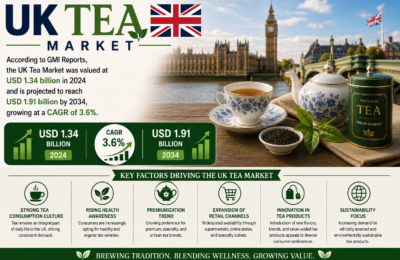
The United Kingdom tea market was valued at USD 1.34 billion in 2024 and is projected to grow at a compound annual growth rate (CAGR) of approximately 3.6%, reaching USD 1.91 billion by 2034, according to GMI Reports. Despite tea’s deeply embedded position within British cultural identity and daily consumption habit, the UK market has experienced gradual volume decline among younger demographic cohorts, prompting industry-wide innovation toward premiumization, specialty tea categories, and convenience-oriented product formats to sustain overall market value growth.
The UK tea market continues to benefit from sustained core black tea consumption among older demographic segments, who maintain strong daily tea-drinking habit consistency, alongside emerging growth within specialty, herbal, and wellness-positioned tea categories increasingly popular among younger consumers seeking both health benefits and premium taste experiences. This demographic bifurcation has driven distinctly different innovation priorities across different market segments and brand positioning strategies.
Sustainability and ethical sourcing credentials have become increasingly significant purchase decision factors within the UK tea market, with Fairtrade and Rainforest Alliance certification achieving substantial mainstream market penetration. Premium and specialty tea categories, including single-origin, organic, and wellness-positioned botanical blends, continue to outpace standard black tea bag category growth, reflecting broader UK beverage market premiumization trends.
Market Overview
The United Kingdom tea market encompasses black tea, green tea, herbal and fruit infusions, and specialty tea categories sold through retail grocery channels, foodservice establishments, and increasingly significant e-commerce and direct-to-consumer distribution channels. Tea occupies a uniquely significant position within British cultural identity, with tea-drinking representing one of the most universally recognized national consumption habits and social rituals.
The UK tea market has historically been dominated by standard black tea bag products consumed with milk, representing the traditional British ‘cup of tea’ format that remains deeply embedded within daily routine and social custom, particularly among older demographic cohorts. However, the market has experienced gradual structural change as younger consumers increasingly favor alternative beverage categories including coffee, and as health and wellness consciousness drives growing interest in herbal, green, and functional tea categories distinct from traditional black tea consumption patterns.
UK tea retail distribution remains dominated by major supermarket chains, reflecting tea’s position as a grocery staple purchased as part of regular household shopping routines. However, specialty tea retailers, premium hospitality channel tea service, and growing e-commerce direct-to-consumer tea brand distribution have introduced meaningful channel diversification and supported premium category growth within the broader UK tea market.
Market Size & Forecast
Market Driving Factors
1. Deep Cultural Embeddedness and Habitual Consumption Patterns
Tea’s profound embeddedness within British cultural identity and daily routine continues to sustain a substantial and remarkably consistent core consumer base, particularly among older demographic cohorts who maintain strong habitual multiple-cup-per-day consumption patterns. This deeply rooted cultural foundation provides the UK tea market with a structurally stable demand base relative to more discretionary or trend-sensitive beverage categories.
2. Premiumization and Specialty Tea Category Growth
Growing UK consumer interest in premium, single-origin, and specialty tea categories, including artisanal loose-leaf teas and distinctive flavor blend innovations, continues to drive average transaction value growth even as overall consumption volume experiences gradual decline. This premiumization trend mirrors broader UK beverage market patterns observed across coffee and other categories, reflecting evolving consumer willingness to pay premium pricing for elevated taste and provenance experiences.
3. Health and Wellness-Positioned Herbal and Functional Tea Growth
Increasing UK consumer health consciousness has driven substantial growth within herbal, green, and functional tea categories positioned around specific wellness benefits including digestive health, relaxation, and immune support. This wellness-oriented growth segment has proven particularly successful in attracting younger consumers who may otherwise exhibit reduced engagement with traditional black tea category products.
4. Sustainability and Ethical Sourcing Certification Expansion
Growing UK consumer expectation for sustainable and ethically sourced tea products has driven substantial Fairtrade, Rainforest Alliance, and organic certification adoption across major tea brands, supporting both premium positioning opportunities and addressing growing consumer scrutiny regarding tea supply chain labor and environmental practices, particularly within the major tea-producing origin countries.
5. Convenience Format Innovation and Ready-to-Drink Tea Development
Continued innovation in convenience-oriented tea formats, including ready-to-drink iced tea products and single-serve premium tea pod systems, has introduced new consumption occasions and demographic appeal beyond traditional hot tea preparation and consumption patterns, supporting incremental market value growth opportunities particularly among younger and more time-constrained consumer segments.
6. Foodservice and Premium Hospitality Tea Service Development
Growing UK hospitality and foodservice sector investment in premium tea service offerings, including dedicated tea sommelier programs and elevated afternoon tea experiences, continues to reinforce tea’s cultural significance while supporting premium category awareness and trial among consumers who may subsequently extend premium tea preferences into at-home consumption habits.
Market Restraining Factors
1. Declining Consumption Volume Among Younger Demographics
UK tea consumption volume has experienced gradual but persistent decline among younger demographic cohorts, who increasingly favor coffee and alternative beverage categories over traditional tea consumption, presenting a structural long-term challenge for sustaining the UK tea market’s core consumer base beyond its currently dominant older demographic segments.
2. Intense Private Label and Value Brand Price Competition
The UK tea market exhibits substantial private label and value brand penetration within standard black tea bag categories, creating intense price competition that constrains margin opportunity and average selling price growth within core, high-volume tea product categories despite broader premiumization trends within specialty segments.
3. Rising Input Costs and Supply Chain Volatility
Tea sourcing from major international origin countries exposes UK tea brands and retailers to currency fluctuation, climate-related crop yield volatility, and international shipping cost variability, introducing meaningful input cost unpredictability that can compress margins or necessitate retail price adjustments potentially affecting consumer purchasing behavior, particularly within price-sensitive standard tea categories.
4. Competition from Coffee and Alternative Beverage Categories
Continued growth in UK coffee consumption and specialty coffee culture, alongside expanding functional beverage and alternative drink category innovation, represents ongoing competitive pressure for tea’s traditional position as the UK’s default hot beverage choice, particularly within social and away-from-home consumption occasions where coffee culture has achieved substantial cultural cachet among younger consumers.
Market Segmentation
By Product Type
Black tea retains the dominant market share, reflecting its deeply established position as the traditional British tea category, though this share continues a gradual long-term decline trajectory. Herbal and fruit infusions represent the fastest-growing product category, benefiting strongly from health and wellness-oriented consumer demand trends and successful innovation in flavor variety and functional positioning.
By Packaging
Tea bags retain the overwhelming majority packaging format share, reflecting their established convenience and habitual usage pattern alignment with traditional British tea preparation methods. Loose leaf tea, while a smaller overall share, commands meaningful premium pricing and benefits from association with specialty and artisanal tea positioning strategies increasingly popular among quality-focused consumers.
By Distribution Channel
Competitive Landscape
The United Kingdom tea market features a combination of heritage British tea brands with deeply established market presence and brand loyalty, alongside growing competition from premium specialty tea companies and private label retailer offerings. Competitive differentiation increasingly centers on sustainability credentials, flavor innovation, and premium positioning within the specialty and wellness tea categories.
Regional Analysis (Within the UK)
Tea consumption within the United Kingdom exhibits relatively consistent demand across most regions given the beverage’s deeply embedded national cultural position, with modest regional variation reflecting demographic composition, income levels, and urban versus rural consumption pattern differences.
Emerging Market Trends
Functional and Adaptogenic Tea Blend Innovation
UK tea brands continue to expand functional and adaptogenic ingredient integration within herbal tea blends, incorporating ingredients positioned for stress relief, sleep support, and immune function benefits. This functional positioning trend reflects broader UK wellness beverage market patterns and has proven particularly effective in attracting younger consumers to herbal tea category trial and adoption.
Sustainable Packaging and Plastic-Free Tea Bag Transition
Major UK tea brands continue to transition toward biodegradable and plastic-free tea bag materials, responding to growing consumer environmental concern regarding traditional tea bag heat-sealing plastic content. This packaging sustainability transition has become an increasingly important brand differentiation and consumer trust factor within the competitive UK tea market landscape.
Direct Trade and Single-Origin Provenance Marketing
Growing UK consumer interest in tea provenance and direct trade sourcing relationships is driving premium tea brand marketing emphasis on single-origin estate sourcing, direct farmer relationship narratives, and detailed provenance storytelling, mirroring specialty coffee market marketing approaches that have proven successful in supporting premium pricing and brand differentiation.
Ready-to-Drink Tea and Cold Brew Format Expansion
Continued UK market development of ready-to-drink iced tea and cold brew tea formats is introducing new consumption occasions beyond traditional hot tea preparation, particularly appealing to younger consumers and supporting incremental category growth opportunities within convenience retail and foodservice channels increasingly important to overall UK beverage market dynamics.
Tea-Based Beauty and Wellness Product Crossover
Growing crossover between tea ingredients and broader beauty and wellness product categories, including tea extract-infused skincare and supplement products, reflects expanding commercial application of tea’s perceived health and wellness positioning beyond traditional beverage consumption, creating adjacent market opportunity for tea ingredient suppliers and brand extension potential for established tea companies.
Key Companies in the United Kingdom Tea Market
-
Unilever (Lipton/PG Tips)
-
Tata Consumer Products (Tetley)
-
Twinings (Associated British Foods)
-
Yorkshire Tea (Bettys & Taylors)
-
Clipper Teas
-
Pukka Herbs
-
Whittard of Chelsea
-
Teapigs (JDE Peet’s)
-
Private Label Supermarket Brands
-
Independent Specialty Tea Companies
Report Target Audience
-
Tea Manufacturers and Brand Owners
-
Retailers and E-commerce Platform Operators
-
Investment and Private Equity Firms
-
Foodservice and Hospitality Sector Operators
-
Tea Ingredient and Botanical Suppliers
-
Sustainability and Ethical Sourcing Certification Bodies
-
Management and Strategy Consultants
-
Academic Researchers in Consumer Behavior and Food/Beverage Trends
Market Segmentation Summary
By Product Type
-
Black Tea
-
Herbal & Fruit Infusions
-
Green Tea
-
Specialty/Other Tea
By Packaging
-
Tea Bags
-
Loose Leaf Tea
-
Ready-to-Drink/Pods
By Distribution Channel
-
Supermarkets & Grocery Retail
-
Online/E-commerce
-
Foodservice & Hospitality
-
Specialty Tea Retailers
By Region (Within the UK)
-
England (excluding London)
-
London
-
Scotland
-
Wales
-
Northern Ireland
About GMI Reports
GMI Reports is a premier market intelligence and research organization providing data-driven insights and strategic analysis across global food, beverage, and consumer goods markets. Our research empowers brands, retailers, and investors to navigate the evolving tea market landscape with confidence. For the United Kingdom Tea Market report and related research, visit www.gmigreports.com or contact our research team for customized intelligence solutions.
www.gmigreports.com