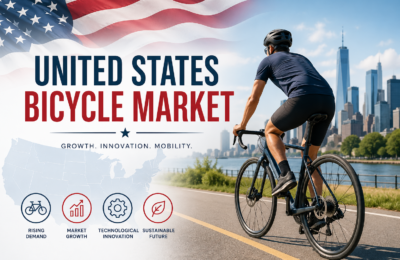
The United States bicycle market was valued at approximately USD 9.18 billion in 2024 and is projected to reach USD 15.2 billion by 2033, expanding at a compound annual growth rate (CAGR) of 6.4% from 2025 to 2033. This sustained growth trajectory is underpinned by a confluence of macro and microeconomic forces: rising health consciousness among the American population, mounting urban congestion, escalating fuel costs, and substantial policy-level support for sustainable urban mobility infrastructure.
The U.S. bicycle industry has undergone a remarkable structural transformation over the past decade. What was once a market dominated by recreational riders has evolved into a multi-dimensional ecosystem encompassing daily urban commuters, performance athletes, fitness enthusiasts, and eco-conscious consumers seeking low-carbon transportation alternatives. The advent of e-bikes — electric-assist bicycles — has particularly disrupted traditional market dynamics, broadening the addressable consumer base to include older adults, long-distance commuters, and individuals who previously found conventional cycling physically taxing.
E-bikes accounted for approximately 34% of total U.S. bicycle market revenue in 2024, with unit sales growing at a CAGR exceeding 14% — nearly 2.2x faster than the broader bicycle market — making electric bicycles the single most disruptive and fastest-growing segment in the industry.
The post-pandemic era catalyzed a permanent behavioral shift in American transportation and lifestyle choices. Bicycle ridership surged significantly during 2020–2021 and, unlike many pandemic-era trends that reversed upon reopening, cycling adoption has shown remarkable stickiness. Surveys indicate that a substantial proportion of new cyclists who began riding during COVID-19 lockdowns have maintained the habit, citing continued benefits in physical health, mental well-being, and commute economics.
United States Bicycle Market Growth Trajectory
The U.S. bicycle market demonstrated resilience even in the face of global supply chain disruptions in 2021–2022, which caused widespread inventory shortages and elevated average selling prices. While these pressures eased considerably by late 2023, the resultant price normalization, combined with improving import logistics, has strengthened market fundamentals heading into the 2025–2033 forecast period.
Market Segmentation Analysis
By Type: Conventional vs. Electric Bicycles
The United States bicycle market is broadly segmented into conventional bicycles and electric bicycles (e-bikes). Conventional bicycles retained the majority market share at approximately 66% of total revenue in 2024, owing to their extensive installed user base and lower price points that render them accessible across all income demographics. However, the balance is steadily tilting.
Electric bicycles are forecast to surpass conventional bicycles in revenue terms by approximately 2031, driven by rapid battery technology improvements, falling lithium-ion battery costs, expanding charging infrastructure, and growing rider familiarity. Average e-bike prices have declined from roughly $2,800 in 2020 to approximately $1,950 in 2024, a trend expected to continue as manufacturing economies of scale deepen.
By Product Category
City and commuter bicycles represent the single largest product category, capturing approximately 28% of the U.S. bicycle market. Their dominance reflects the growing embrace of cycling as a practical, cost-effective mode of urban transportation. American cities have invested significantly in protected bike lanes and cycling infrastructure, with total lane-miles of protected bike infrastructure expanding by approximately 37% between 2019 and 2024 across the 50 largest metropolitan areas.
Mountain bikes hold the second-largest position at ~24% market share, buoyed by the outdoor recreation boom post-pandemic and the growth of purpose-built trail systems across western U.S. states. Road bikes capture approximately 19% of the market, serving performance enthusiasts and competitive cyclists who are less price-sensitive and willing to invest in premium aluminum, carbon-fiber, and titanium frame geometries.
By Price Range
| Price Range | Market Share (2024) | CAGR (2025–2033) | Key Consumer Profile |
|---|---|---|---|
| Budget (< $500) | 31% | +4.1% | Casual riders, children, first-timers |
| Mid-Range ($500–$1,500) | 38% | +5.9% | Regular commuters, fitness cyclists |
| Premium ($1,500–$4,000) | 22% | +8.2% | Enthusiasts, performance athletes |
| Ultra-Premium (> $4,000) | 9% | +9.7% | Competitive racers, wealthy hobbyists |
The premium and ultra-premium price tiers are exhibiting the fastest growth rates, reflecting a broader “premiumization” trend in American consumer goods. Cyclists who have invested in the sport are increasingly upgrading to higher-specification models, while affluent newcomers — particularly those attracted to e-bikes — often enter at higher price points. The mid-range segment commands the largest volume share and is expected to remain the market’s backbone through the forecast period.
By Distribution Channel
Market Drivers, Restraints & Opportunities
Key Growth Drivers
- Health & Wellness Awareness:The American Fitness Culture has expanded dramatically, with cycling serving as a low-impact cardiovascular activity accessible to consumers across age groups. Physician recommendations for regular moderate exercise have boosted commuter and recreational cycling alike.
- Urban Mobility Transformation:Rising urban congestion, parking costs, and growing municipal investment in protected bike lanes are collectively making cycling a pragmatic commuting option in major metros including New York, Los Angeles, Chicago, Seattle, and Austin.
- E-Bike Battery Technology Improvements:Advances in lithium-ion and emerging solid-state battery technology have extended e-bike range from ~30 miles per charge in 2018 to ~70 miles in 2024 high-end models, substantially expanding practical utility for daily commuters.
- Federal & State Policy Support:Tax credits, subsidies, and infrastructure funding allocated to active transportation under federal programs have reduced net consumer acquisition costs for e-bikes and supported municipal cycling infrastructure development.
- Environmental Consciousness:Growing consumer concern about carbon footprints and sustainability is nudging transportation choices toward low-emission alternatives, positioning bicycles — especially e-bikes — as credible car substitutes for short- and medium-distance trips.
- Post-Pandemic Behavioral Persistence:Cycling habits formed during pandemic lockdowns have proven durable, sustained by the demonstrated mental health, fitness, and cost benefits experienced by new riders.
Market Restraints
- Infrastructure Gaps in Suburban & Rural Areas:Beyond major metropolitan cores, cycling infrastructure remains fragmented. Safety concerns on high-speed roads without dedicated cycling facilities continue to deter potential adopters in suburban and rural geographies.
- High E-Bike Entry Costs:Despite declining average prices, quality e-bikes remain a significant capital expenditure for median-income households, limiting mass adoption in price-sensitive demographics without greater subsidy penetration.
- Bicycle Theft Concerns:With high-value bicycles representing targets for theft, particularly in urban areas, a non-trivial portion of potential buyers cites theft risk as a deterrent to cycling adoption and premium bicycle investment.
- Seasonal Demand Variability:Climate and weather conditions create significant regional demand seasonality, with northern states experiencing sharp demand compression in winter months, creating inventory management challenges for retailers.
Emerging Opportunities
- Cargo Bicycle Segment:Cargo bikes are gaining traction as last-mile delivery solutions for urban logistics operators and as family transportation alternatives, representing a nascent but rapidly growing sub-segment with significant commercial and consumer potential.
- Bicycle-as-a-Service (BaaS) Models:Subscription-based bicycle services, bike-share programs, and rental platforms present scalable distribution opportunities, particularly in dense urban markets.
- Connected Bicycle Ecosystem:Integration of GPS navigation, anti-theft tracking, performance monitoring, and health metric synchronization with smartphones is creating a premium connected cycling segment commanding significant price premiums.
- Corporate Wellness Programs:An increasing number of U.S. employers are incorporating cycling incentives into corporate wellness programs, including commuter bicycle subsidies, on-site storage facilities, and shower infrastructure.
Regional Analysis
The United States bicycle market exhibits pronounced regional heterogeneity, shaped by climate, urban density, topography, demographic composition, and local policy environments.
| Region | Revenue Share (2024) | CAGR (2025–2033) | Key Characteristics |
|---|---|---|---|
| West | 32% | +7.2% | Highest cycling adoption; California, Oregon, WA leaders |
| Northeast | 24% | +6.1% | Dense urban markets; NYC, Boston bike-share hubs |
| South | 22% | +6.8% | Fastest growing; Texas, Florida seeing infrastructure surge |
| Midwest | 14% | +5.1% | Flat terrain favorable; Chicago leads metro cycling |
| Mountain West | 8% | +8.4% | Mountain biking stronghold; Colorado, Utah, Idaho |
The Western region commands the largest revenue share at approximately 32%, reflecting California’s progressive cycling culture, extensive protected bike infrastructure in cities like San Francisco, Los Angeles, and Portland, and favorable year-round riding climate. The Southern region is experiencing the sharpest acceleration in cycling adoption, with metropolitan areas across Texas and Florida investing in cycling infrastructure as population growth strains road capacity.
The Mountain West — while modest in absolute market size — is forecast to register the highest regional CAGR at 8.4%, propelled by the explosive growth of mountain biking as both a recreational pursuit and a tourism driver in states such as Colorado, Utah, and Idaho, which have developed world-class trail networks.
Competitive Landscape
The United States bicycle market is characterized by moderate-to-high competition, with a mix of globally recognized multinational manufacturers, domestic specialty brands, and emerging direct-to-consumer e-bike startups. The competitive intensity is highest in the premium and electric bicycle segments, where technology differentiation, brand equity, and innovation pace are critical success factors.
Strategic activity in the market has intensified markedly since 2022. Key competitive dynamics include accelerating vertical integration — with leading brands investing in proprietary battery management systems, motor platforms, and connected technology stacks — alongside geographic expansion of exclusive dealer networks. Direct-to-consumer e-bike brands have disrupted traditional specialty retail economics, compressing margins and forcing brick-and-mortar retailers to differentiate through service, customization, and experiential retail offerings.
Key Industry Trends
Research Methodology
This market analysis is based on a rigorous, multi-tiered primary and secondary research framework. Primary research encompasses structured interviews with bicycle manufacturers, specialty retailers, urban mobility planners, and consumer panels across all major U.S. geographic regions. Secondary research draws on regulatory filings, trade association publications, patent databases, and macroeconomic indicators. Our proprietary demand modeling incorporates transportation behavioral data, demographic projections, and macroeconomic scenario analysis to generate robust base-case, optimistic, and conservative market size forecasts.
Market sizing is conducted using a combination of top-down (total addressable market estimation from macro indicators) and bottom-up (aggregation of segment-level demand drivers and supplier-side production data) methodologies, with cross-validation against import/export trade data and retail sell-through analytics. All revenue figures are expressed in nominal USD and reflect sales at the retail level unless otherwise stated.