MARKET RESEARCH REPORT
Mood-Boosting Functional Foods, Adaptogens & Nootropics Market
Global Insights, Analysis & Forecasts to 2034
Published by GMI Reports | www.gmigreports.com
Executive Summary
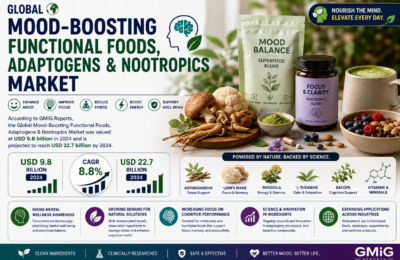
The global mood-boosting functional foods, adaptogens, and nootropics market has entered a phase of accelerated expansion as consumers increasingly seek natural, food-based solutions for stress management, cognitive performance, and emotional wellbeing. According to GMI Reports, the market was valued at USD 9.8 billion in 2024 and is projected to expand at a compound annual growth rate (CAGR) of approximately 8.7%, reaching USD 22.7 billion by 2034.
Growth is being driven by rising global awareness of the gut-brain connection, mainstreaming of adaptogenic herbs such as ashwagandha and rhodiola, and the proliferation of ready-to-drink formats that combine nootropic compounds with functional beverage convenience. Category expansion is no longer confined to specialty supplement retailers, with mood-focused functional foods now appearing across mainstream grocery, e-commerce, and direct-to-consumer subscription channels.
The convergence of mental wellness awareness, post-pandemic stress management priorities, and a younger consumer base seeking pharmaceutical alternatives has positioned this category among the fastest-growing segments within the broader functional nutrition industry. Ready-to-drink formats, gummies, and functional coffee/tea alternatives are emerging as the primary growth vehicles, gradually displacing traditional capsule and powder delivery formats among younger demographics.
Market Overview
The mood-boosting functional foods, adaptogens, and nootropics market encompasses a broad category of food, beverage, and supplement products formulated with ingredients scientifically or traditionally associated with stress resilience, cognitive enhancement, and emotional regulation. Core ingredient categories include adaptogenic herbs (ashwagandha, rhodiola, holy basil), functional mushrooms (lion’s mane, reishi, cordyceps), amino acids and nootropic compounds (L-theanine, citicoline), and mood-supportive botanicals such as saffron extract and St. John’s Wort.
Product formats span capsules and tablets, powders, ready-to-drink beverages, gummies, functional bars, and increasingly, mainstream food applications including fortified coffee, tea, and snack products. The category sits at the intersection of the nutraceutical, functional food and beverage, and mental wellness industries, drawing consumer interest from health-conscious millennials and Gen Z demographics alongside an aging population seeking cognitive support.
Regulatory frameworks vary considerably by region, with structure/function claim limitations in the United States, novel food authorization requirements in the European Union, and evolving traditional medicine recognition pathways across Asia Pacific shaping product formulation and marketing strategies. Clinical substantiation and third-party ingredient certification are becoming increasingly important competitive differentiators as the category matures.
Market Size & Forecast
Market Driving Factors
1. Rising Global Prevalence of Stress and Anxiety
Growing recognition of chronic stress and anxiety as widespread public health concerns is driving consumers toward preventative, food-based interventions. Adaptogenic and nootropic products are increasingly positioned as accessible, non-pharmaceutical options for daily stress management, particularly among working professionals and students.
2. Mainstreaming of Functional Beverage Formats
Ready-to-drink beverages incorporating adaptogens and nootropics have moved from niche wellness retailers into mainstream grocery and convenience channels. Functional beverage brands combining mood-support ingredients with familiar formats such as sparkling water, coffee alternatives, and mocktails are expanding category reach among consumers seeking convenient, on-the-go options.
3. Growing Scientific Validation of Key Ingredients
Expanding clinical research on ingredients such as ashwagandha, L-theanine, and saffron extract is strengthening consumer and retailer confidence in efficacy claims. Ingredient suppliers are increasingly investing in human clinical trials to support evidence-based marketing, differentiating premium formulations from unsubstantiated wellness products.
4. Gen Z and Millennial Preference for Natural Alternatives
Younger consumers are exhibiting strong preference for natural, plant-based mood and cognitive support products over traditional pharmaceutical options, driven by concerns about side effects, dependency, and a broader cultural shift toward holistic wellness and preventative self-care.
5. E-Commerce and Direct-to-Consumer Channel Expansion
The proliferation of direct-to-consumer subscription models and specialized wellness e-commerce platforms has lowered market entry barriers for emerging brands while improving product discovery and consumer education around adaptogen and nootropic benefits.
Market Restraining Factors
1. Regulatory Uncertainty Around Health Claims
Varying and evolving regulatory frameworks governing permissible health and cognitive-benefit claims across different jurisdictions create compliance complexity for manufacturers, limiting marketing flexibility and slowing product launches in tightly regulated markets.
2. Limited Long-Term Clinical Evidence for Some Ingredients
While certain adaptogens and nootropic compounds benefit from growing clinical research, many ingredients in the broader category still lack robust long-term human efficacy and safety data, creating skepticism among some healthcare professionals and cautious consumers.
3. Ingredient Sourcing and Supply Chain Volatility
Key botanical ingredients, particularly functional mushrooms and certain adaptogenic herbs, face supply constraints tied to agricultural yield variability and geographic concentration of cultivation, creating periodic input cost pressure and quality consistency challenges.
4. Market Fragmentation and Product Quality Variability
The category includes a wide range of brands with varying manufacturing standards and ingredient sourcing quality, and instances of mislabeling or inconsistent potency have periodically undermined broader consumer trust in the category.
Market Segmentation
By Product Type
The mood-boosting functional foods, adaptogens, and nootropics market is segmented by product type into adaptogenic supplements, nootropic supplements, and functional foods/beverages.
Adaptogenic supplements retain the largest share given widespread consumer familiarity with ingredients such as ashwagandha, while functional foods and beverages are gaining share fastest as mood-support ingredients migrate into mainstream snack, coffee, and beverage applications.
By Key Ingredient
The market is segmented by key ingredient into ashwagandha, functional mushrooms, L-theanine/amino acids, rhodiola, and other botanicals.
By Distribution Channel
Competitive Landscape
The mood-boosting functional foods, adaptogens, and nootropics market remains moderately fragmented, characterized by a mix of established supplement brands, functional beverage disruptors, and emerging direct-to-consumer wellness companies. The leading ten companies account for an estimated 35-40% of total category revenues, reflecting continued opportunity for new entrants.
Regional Analysis
North America leads the global mood-boosting functional foods, adaptogens, and nootropics market, generating an estimated 36% of total global revenues, supported by high consumer wellness spending and a mature direct-to-consumer retail infrastructure. Asia Pacific represents the fastest-growing region, driven by traditional herbal medicine heritage and rapidly expanding e-commerce penetration.
Emerging Market Trends
Personalized Nootropic and Adaptogen Formulations
Brands are increasingly offering personalized supplement regimens based on consumer questionnaires, biomarker data, or wearable device integration, tailoring adaptogen and nootropic blends to individual stress, sleep, and cognitive performance profiles.
Mainstream Food and Beverage Integration
Mood-support ingredients are increasingly appearing in mainstream food formats beyond dedicated supplements, including fortified snack bars, functional coffee alternatives, and mass-market beverage lines, expanding category reach into everyday consumption occasions.
Clinical Validation and Third-Party Certification
Growing consumer skepticism toward unsubstantiated wellness claims is driving increased investment in human clinical trials and third-party purity/potency certification, with certified formulations commanding premium pricing and stronger retailer trust.
Functional Mushroom Category Expansion
Lion’s mane, reishi, and cordyceps mushroom-based products are experiencing particularly rapid growth as consumer familiarity increases, supported by expanding cultivation capacity and growing scientific interest in their cognitive and stress-resilience properties.
Key Companies in the Mood-Boosting Functional Foods, Adaptogens & Nootropics Market
-
Organic India
-
Four Sigmatic
-
REBBL Inc.
-
Ritual
-
HVMN Inc.
-
Neuro Brands
-
Om Mushroom Superfood
-
Moon Juice
-
TRIP
-
Thesis
-
Other Regional and Emerging Wellness Brands
Report Target Audience
-
Functional Food and Beverage Manufacturers
-
Dietary Supplement and Nutraceutical Companies
-
Investment and Venture Capital Firms
-
Ingredient Suppliers and Botanical Extract Producers
-
Regulatory and Food Safety Bodies
-
Retail and E-Commerce Wellness Platforms
-
Management Consulting and Advisory Firms
-
Academic and Clinical Researchers in Nutrition Science
Market Segmentation Summary
By Product Type
-
Adaptogenic Supplements
-
Nootropic Supplements
-
Functional Foods & Beverages
By Key Ingredient
-
Ashwagandha
-
Functional Mushrooms
-
L-Theanine & Amino Acids
-
Rhodiola & Other Adaptogens
-
Other Botanicals
By Distribution Channel
-
E-Commerce & Direct-to-Consumer
-
Health & Specialty Stores
-
Mainstream Grocery & Supermarkets
-
Pharmacies & Drugstores
By Region
-
North America
-
Europe
-
Asia Pacific
-
Latin America
-
Middle East & Africa
About GMI Reports
GMI Reports is a leading market intelligence and research firm delivering actionable insights across a broad spectrum of industries globally. Our rigorous research methodologies, extensive primary and secondary data sources, and sector-specialist analysts enable our clients to make informed strategic decisions in complex and fast-evolving markets.
For further information, customized research, or licensing inquiries, please visit www.gmigreports.com or contact our research team directly.
www.gmigreports.com
© 2025 GMI Reports. All Rights Reserved. Unauthorized reproduction or distribution is prohibited.