MARKET RESEARCH REPORT
Recycled Plastics Market
Global Insights, Analysis & Forecasts to 2034
Published by GMI Reports | www.gmigreports.com
Executive Summary
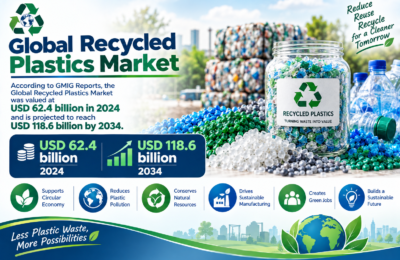
The global recycled plastics market was valued at USD 62.4 billion in 2024 and is projected to grow at a compound annual growth rate (CAGR) of approximately 6.6%, reaching USD 118.6 billion by 2034, according to GMI Reports. The recycled plastics market has entered a period of structural transformation driven by unprecedented policy momentum, brand owner sustainability commitment investment, and advancing recycling technology capability that is collectively elevating recycled plastic content demand well beyond historical market development trajectories driven primarily by commodity price arbitrage between virgin and recycled polymer pricing.
The European Union’s Packaging and Packaging Waste Regulation mandating minimum recycled content in plastic packaging, the United Nations Global Plastics Treaty negotiation advancing toward binding international plastic waste reduction commitments, extended producer responsibility scheme proliferation across Asia Pacific and Latin America, and major consumer goods company publicly committed recycled content targets are simultaneously creating regulatory pull and voluntary demand stimulus that is driving substantial new recycled plastics market value creation across multiple end-use sectors.
Chemical recycling technology advancement, enabling depolymerization and pyrolysis-based plastic waste conversion into recycled polymer feedstocks with material quality approaching virgin plastic performance, is progressively addressing the quality limitations of mechanical recycling that have historically constrained recycled plastic substitution rates in demanding food contact, medical, and high-performance engineering polymer applications. This technology frontier expansion is critical to achieving the substantially higher recycled content rates mandated within evolving global regulatory frameworks.
Market Overview
The global recycled plastics market encompasses mechanical recycling operations recovering polyethylene terephthalate (PET), high-density polyethylene (HDPE), polypropylene (PP), polyethylene (PE), polystyrene (PS), and other polymer types from post-consumer and post-industrial plastic waste streams, producing recycled polymer pellets and compounds for re-use in packaging, construction, automotive, textile, and consumer product manufacturing applications. The market additionally encompasses the growing chemical recycling sector, converting mixed or contaminated plastic waste streams not amenable to mechanical recycling into recycled polymer feedstocks through depolymerization, pyrolysis, gasification, or solvent-based purification processes.
The recycled plastics value chain encompasses collection and sorting infrastructure capturing plastic waste from household, commercial, and industrial sources; material recovery and mechanical or chemical processing operations converting collected plastic waste into marketable recycled polymer products; compounding and blending operations tailoring recycled polymer properties for specific end-use application requirements; and end-market application manufacturing incorporating recycled polymer content. Each value chain stage represents distinct market participants, investment requirements, and commercial challenges affecting overall recycled plastic supply chain development.
The market’s fundamental challenge is addressing the persistent gap between rapidly growing recycled plastic demand, driven by regulatory requirements and voluntary brand owner commitments, and the slower growth in technically suitable recycled plastic supply constrained by collection infrastructure limitations, sorting technology capability gaps, processing quality inconsistency, and economic viability uncertainty particularly when virgin plastic prices decline relative to recycled plastic production costs. Closing this supply-demand gap requires sustained investment across collection, sorting, processing, and quality assurance infrastructure globally.
Market Size & Forecast
Market Driving Factors
1. Regulatory Mandatory Recycled Content Requirements
The EU Packaging and Packaging Waste Regulation’s mandatory minimum recycled content requirements for plastic packaging — mandating 30% recycled content in PET bottles by 2030, rising to 65% by 2040, and equivalent requirements across other packaging categories — represent the most significant regulatory demand stimulus for recycled plastics in the market’s history. Combined with equivalent national regulations across the UK, South Korea, Japan, and emerging regulations across North America and Asia Pacific, mandatory content requirements are creating structural, compliance-driven recycled plastic demand independent of voluntary sustainability commitment or commodity price dynamics.
2. Brand Owner Voluntary Recycled Content Commitment
Major global consumer goods and packaging companies including Unilever, Nestlé, Coca-Cola, PepsiCo, Danone, Procter & Gamble, and hundreds of their peers have made public commitments to incorporating substantial recycled plastic content targets within their packaging portfolios, creating voluntary demand that substantially amplifies regulatory requirement-driven demand. These commitments reflect both genuine corporate sustainability strategy and consumer and investor expectation management that creates commercial imperative reinforcing regulatory compliance motivation.
3. Extended Producer Responsibility Scheme Proliferation
Rapid global proliferation of extended producer responsibility schemes requiring plastic packaging producers to finance and manage plastic waste collection and recycling infrastructure creates both collection and processing investment stimulus and incentivizes recycled content use as a mechanism for satisfying EPR scheme compliance obligations. EPR schemes across Europe, Asia Pacific, and Latin America are collectively creating a growing network of producer-financed recycling infrastructure that improves recycled plastic supply reliability and quality.
4. Chemical Recycling Technology Commercial Scale-Up
The accelerating commercial scale-up of chemical recycling technologies including pyrolysis, depolymerization of PET and nylon, and solvent-based purification of polystyrene and polyolefins is progressively expanding the addressable plastic waste stream amenable to high-quality recycled polymer production beyond the limitations of mechanical recycling. Chemical recycling enables treatment of contaminated, colored, and multilayer plastic waste streams previously destined for incineration or landfill disposal, substantially expanding the potential recycled plastic supply base.
5. Circular Economy Investment and ESG Capital Allocation
Growing institutional investor emphasis on circular economy metrics within ESG investment frameworks, combined with green and sustainability-linked bond market development specifically targeting plastic circularity infrastructure investment, is improving capital access for recycling infrastructure development projects that historically faced financing cost disadvantages relative to virgin plastic production. This ESG-aligned capital availability is accelerating investment in collection systems, sorting infrastructure, and chemical recycling plant development globally.
6. Textile and Fashion Industry Recycled Fiber Demand
The global fashion and textile industry’s growing adoption of recycled PET fiber derived from post-consumer plastic bottles, driven by brand sustainability commitments and growing consumer preference for recycled content textiles, represents one of the largest and fastest-growing end-market applications for recycled plastic content. Major sportswear, outdoor apparel, and fast fashion brands have made significant recycled fiber sourcing commitments that create sustained PET bottle recycling demand independent of packaging sector recycled content requirements.
Market Restraining Factors
1. Virgin Plastic Price Competitiveness and Oil Price Sensitivity
Recycled plastic’s commercial competitiveness against virgin polymer alternatives is significantly influenced by crude oil and natural gas feedstock price dynamics affecting virgin plastic production costs. Periods of low oil prices that reduce virgin polymer pricing can eliminate the cost parity or recycled plastic price premium scenarios that complicate recycled plastic adoption beyond regulatory-mandated minimum content requirements, requiring policy intervention or voluntary premium acceptance to sustain market development momentum during unfavorable commodity price environments.
2. Collection Infrastructure and Sorting Technology Gaps
Significant gaps in plastic waste collection infrastructure, particularly in developing economies with limited municipal solid waste management systems, and sorting technology limitations in segregating post-consumer mixed plastic waste into clean, single-polymer streams suitable for high-quality mechanical recycling, constrain both the total recoverable plastic waste volume and the quality achievable from collected material. These infrastructure limitations represent fundamental supply-side bottlenecks that investment in collection and sorting technology must address to support recycled plastic supply growth.
3. Quality Inconsistency and Contamination Challenges
Post-consumer recycled plastic’s quality variability, resulting from mixed polymer contamination, residual food and chemical contamination, color variation, and degradation from prior use cycles, creates technical complexity and processing cost challenges for manufacturers seeking to incorporate recycled content into products with stringent performance specifications. Food contact material safety requirements and color consistency demands in consumer products particularly constrain recycled plastic adoption rates in demanding end-use applications.
4. Chemical Recycling Scale and Cost Maturity Timeline
While chemical recycling technology is advancing rapidly, the majority of chemical recycling capacity remains at pilot or early commercial scale with production costs substantially above both mechanical recycling and virgin plastic production economics. The timeline for chemical recycling to achieve cost competitiveness at commercial scale necessary to meaningfully expand beyond regulatory-incentivized early adoption into broader market penetration involves significant technical and commercial scale-up risk that moderates short-term market contribution from this technology category.
Market Segmentation
By Plastic Type
PET retains the dominant recycled plastic type market share and is projected to strengthen this position, driven by beverage bottle recycling’s well-established global infrastructure, growing EU mandated recycled PET content requirements, and the textile fiber recycling demand for rPET fiber. HDPE maintains the second-largest share, supported by its strong recyclability through established collection and processing systems for detergent, personal care, and milk bottle post-consumer streams.
By Recycling Process
Mechanical recycling retains the overwhelming dominant market share, reflecting decades of established infrastructure investment and cost-effective operation for high-quality collected plastic streams. Chemical recycling, while representing a small current market share, is the fastest-growing process category and is projected to gain meaningful proportional share as commercial scale-up advances and policy frameworks specifically incentivizing chemically recycled content adoption within food contact and demanding performance applications become more prevalent.
By Application
Competitive Landscape
The global recycled plastics market features a diverse competitive landscape spanning large integrated waste management and recycling companies operating national-scale collection and processing networks, specialist recycled plastic compounders delivering application-specific material performance, chemical recycling technology developers advancing next-generation conversion platforms, and virgin plastic producers investing in recycled content capability to maintain customer relationship relevance within evolving sustainability requirement frameworks.
Regional Analysis
Asia Pacific represents the largest global recycled plastics market, reflecting the region’s massive plastic production and consumption base alongside rapidly expanding recycling infrastructure investment driven by China’s domestic recycling policy development and broader Asian market EPR scheme adoption. Europe represents the most policy-advanced market with the most stringent mandatory recycled content requirements driving the highest recycled content adoption rates globally.
Emerging Market Trends
UN Global Plastics Treaty Implementation Preparation
The ongoing negotiation and anticipated finalization of the United Nations Global Plastics Treaty, establishing binding international obligations on plastic production, design for recyclability, and recycled content requirements across signatory nations, is creating significant market anticipation investment as recycling infrastructure developers, brand owners, and polymer producers position for the treaty’s expected binding recycled content and collection rate obligations that will substantially expand the global mandatory recycled plastic demand base beyond existing national regulatory frameworks.
Chemical Recycling Investment Surge and Commercial Scale-Up
An extraordinary investment surge in chemical recycling technology development and commercial plant construction is advancing multiple technology platforms — including PET depolymerization by Eastman and Loop Industries, PP solvent purification by PureCycle, and mixed plastic pyrolysis by Plastic Energy, Quantafuel, and numerous other developers — toward commercial-scale production capacity that will progressively expand the quality and volume of chemically recycled polymer available for demanding food contact and high-performance engineering applications.
Deposit Return Scheme Expansion Improving Collection Quality
Rapid global expansion of deposit return schemes for beverage containers, extending from established European and Australian systems to new schemes launching across Canada, England, Scotland, and several US states, is substantially improving the collection rate and material quality of post-consumer PET and HDPE beverage container streams. DRS-collected material’s superior cleanliness, colour segregation, and single-polymer purity relative to kerbside-collected mixed plastics delivers meaningfully higher recycled polymer quality supporting food-grade recycled content adoption.
Recycled Content Traceability and Mass Balance Certification
Growing brand owner demand for credible recycled content traceability documentation, and the development of third-party mass balance certification standards including ISCC PLUS and REDcert for chemically recycled polymer content attribution, is creating infrastructure for transparent recycled content claim communication that supports premium pricing for certified recycled plastic materials and enables brand owners to substantiate recycled content marketing claims with auditable supply chain documentation.
Plastic Design for Recyclability Standards Advancement
Growing adoption of design for recyclability standards within plastic packaging design, including the Plastics Recyclability Evaluation Protocol and national recyclability labeling scheme requirements, is progressively improving the recyclability of new plastic packaging entering the waste stream and reducing the contamination and sorting complexity challenges that degrade mechanical recycling economics and output quality. This upstream design intervention is a critical complement to downstream recycling infrastructure investment in building a truly circular plastic economy.
Key Companies in the Global Recycled Plastics Market
-
Veolia Environment
-
Indorama Ventures
-
Far Eastern New Century Corp.
-
Biffa PLC
-
Eastman Chemical Company (Molecular Recycling)
-
Plastic Energy
-
PureCycle Technologies
-
Alpla Group
-
Renewlogy
-
Loop Industries
-
Recycling Technologies
-
Regional Post-Consumer Plastics Recyclers
Report Target Audience
-
Plastic Recycling Companies and Technology Developers
-
Consumer Goods and Packaging Manufacturers
-
Virgin Plastic Producers Developing Recycled Content
-
Investment and Private Equity Firms
-
Government Environmental Policy Agencies
-
Waste Management Companies
-
Management and Strategy Consultants
-
Academic Researchers in Polymer Science and Circular Economy
Market Segmentation Summary
By Plastic Type
-
PET (Polyethylene Terephthalate)
-
HDPE (High-Density Polyethylene)
-
PP (Polypropylene)
-
LDPE/LLDPE (Low-Density Polyethylene)
-
PVC (Polyvinyl Chloride)
-
Other Plastics (PS, PC, ABS, etc.)
By Recycling Process
-
Mechanical Recycling
-
Chemical Recycling
By Application
-
Packaging
-
Building & Construction
-
Textiles & Fibers
-
Automotive
-
Consumer Products
-
Other Applications
By Region
-
Asia Pacific
-
Europe
-
North America
-
Latin America
-
Middle East & Africa
About GMI Reports
GMI Reports is a premier market intelligence and research organization providing data-driven insights and strategic analysis across global materials, sustainability, circular economy, and environmental markets. Our research empowers recyclers, brands, investors, and policymakers to navigate the evolving recycled plastics landscape with confidence. For the Recycled Plastics Market report and related research, visit www.gmigreports.com or contact our research team for customized intelligence solutions.
www.gmigreports.com