MARKET RESEARCH REPORT
United Kingdom Popcorn Market
Insights, Analysis & Forecasts to 2034
Published by GMI Reports | www.gmigreports.com
Executive Summary
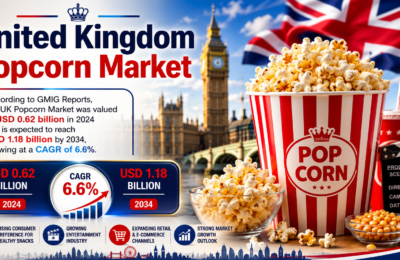
The United Kingdom popcorn market has undergone a remarkable transformation over the past decade, evolving from a niche cinema snack into one of the fastest-growing and most dynamically innovative segments of the broader UK savoury snacks category. Valued at USD 0.62 billion in 2024, the market is projected to grow at a compound annual growth rate (CAGR) of approximately 6.6%, reaching USD 1.18 billion by 2034, according to GMI Reports.
The UK popcorn revolution has been defined by a wave of entrepreneurial British brands — led by Propercorn, Joe & Seph’s, and Tyrrells Popcorn — that repositioned popcorn from a commodity cinema treat into a premium, flavour-forward, health-conscious snacking choice suitable for every-day and every-occasion consumption. These brands pioneered bold flavour innovation, premium ingredient positioning, and distinctive packaging design that captured the attention of health-seeking British snackers looking for alternatives to conventional crisps and confectionery.
The market is sustained by several structural tailwinds: the broader snackification of British eating habits, the well-established cultural association between popcorn and home entertainment (streaming services, gaming, film nights), the nutritional profile of air-popped popcorn as a naturally high-fibre, relatively low-calorie whole-grain snack, and a retail environment that has enthusiastically embraced premium popcorn as a high-margin, differentiated category. The market spans a broad price and positioning spectrum from value multipacks sold through discounters to ultra-premium artisan popcorn gifting products sold through Fortnum & Mason and independent delicatessens.
The UK popcorn market continues to attract new entrants and innovation investment as brands compete on flavour creativity, functional ingredient positioning (protein-enriched, low-sugar, vegan, organic), sustainable and compostable packaging, and channel-specific product development for cinema, retail, food service, and direct-to-consumer gifting formats.
Market Overview
The United Kingdom popcorn market encompasses the manufacture, import, distribution, and retail of all commercially produced popcorn products sold through retail, food service, cinema, and direct-to-consumer channels. This includes ready-to-eat (RTE) bagged popcorn in all flavour and positioning variants, microwave popcorn kits for home preparation, popcorn kernels for home popping, cinema and food service popcorn, and premium gifting and seasonal popcorn products.
The UK popcorn landscape is served by a diverse mix of domestic artisan and challenger brands, international FMCG corporations with popcorn portfolio entries, private label ranges from major grocery retailers, and cinema-specific brands operating through the exhibition channel. The domestic premium challenger brand sector — which generated the category’s growth momentum from the mid-2000s onward — continues to drive innovation and consumer recruitment, while multinational snack corporations including PepsiCo (through Walkers), Kellogg’s, and Intersnack have entered the category with scale distribution advantages.
The UK’s strong snacking culture, high grocery retail sophistication, and consumer receptivity to novel flavour experiences and premium snack positioning create a particularly fertile commercial environment for popcorn brand development. British consumers have demonstrated consistent willingness to trade up from economy to premium popcorn products, supporting above-average selling price growth across the category. The category’s crossover positioning between sweet confectionery and savoury snacks enables popcorn to access multiple retail category locations — snacks fixture, confectionery aisle, and free-from/health food sections — expanding shelf presence and consumer discovery opportunities.
Distribution is anchored by the major UK grocery multiples — Tesco, Sainsbury’s, ASDA, Morrisons, Waitrose, and M&S — alongside the rapidly growing discounter channel (Aldi and Lidl), convenience retailers (Co-op, Spar, McColl’s), food service distributors serving cinema and leisure venues, and a growing direct-to-consumer gifting channel operating through brand websites and platforms including Not On The High Street and Amazon.
Market Size & Forecast
Market Driving Factors
1. Health-Conscious Snacking and Better-for-You Positioning
Popcorn’s nutritional credentials as a naturally whole-grain, high-fibre, gluten-free snack align strongly with the prevailing UK consumer health and wellness orientation. Air-popped popcorn delivers relatively low calorie density compared to conventional crisps and confectionery, supporting its positioning as a guilt-reduced snacking choice. The Food Standards Agency’s traffic light labelling system has benefited premium lightly seasoned popcorn products, which can achieve green and amber ratings that contrast favourably with the predominantly amber and red profiles of competing crisps and snack products. UK premium popcorn brands have capitalised on these nutritional advantages through health-forward marketing messaging that positions popcorn as a smarter snack choice without compromising on flavour satisfaction.
2. Bold Flavour Innovation and Premiumisation
Flavour innovation has been the primary engine of UK popcorn market growth, with British brands pioneering adventurous flavour combinations that have expanded the category’s appeal well beyond traditional sweet and salted offerings. Sweet and savoury flavour hybrids — including sea salt and dark chocolate, sweet chilli and lime, mature cheddar and red onion, and champagne and strawberry — have established popcorn as a flavour-forward innovation platform comparable to the gourmet crisp category. Joe & Seph’s popcorn, acclaimed for its premium ingredient formulations including real cheese, truffle, and gourmet confectionery flavours, has demonstrated the premium price ceiling achievable in the UK popcorn category. Seasonal limited editions and collaborative flavour launches with celebrity chefs, food brands, and entertainment properties generate consumer excitement and repeat purchase occasions that sustain category dynamism.
3. Home Entertainment and Streaming Culture
The enduring cultural association between popcorn and screen entertainment has been powerfully amplified by the explosive growth of subscription video streaming services in UK households. Netflix, Disney+, Amazon Prime Video, Apple TV+, and other streaming platforms have created an at-home cinema culture that directly drives popcorn consumption occasions across all UK demographic groups. The growth of home gaming culture among younger demographics creates an additional screen entertainment occasion that mirrors the cinema snacking association for a tech-native consumer cohort. Retail multipacks, sharing bags, and cinema-style popcorn bucket formats are specifically designed and marketed for home entertainment occasions, directly addressing this structural demand driver.
4. Cinema and Leisure Venue Channel Resilience
UK cinema attendance, while below pre-pandemic peaks, has recovered significantly following the reopening of venues and the return of major Hollywood and domestic film releases. Cinema popcorn remains one of the most profitable food and beverage items in cinema operators’ concession portfolios, with premium flavoured popcorn ranges increasingly supplementing traditional butter and sweet popcorn offerings at the concession stand. Major UK cinema chains including Odeon, Vue, and Cineworld have expanded their popcorn product ranges and premium flavour offerings to generate higher transaction values and differentiate the cinema experience. Beyond cinema, popcorn has gained distribution in bowling alleys, multiplex entertainment complexes, sports venues, and theme parks as a versatile concession snack format.
5. Retail Innovation and Premium Private Label Development
UK grocery retailers have invested significantly in developing premium and differentiated private label popcorn ranges that compete directly with branded products while generating higher gross margins for the retailer. Waitrose and M&S have developed premium popcorn ranges featuring elevated flavour combinations and quality ingredient claims that provide credible alternatives to premium challenger brands at competitive price points. Aldi and Lidl’s entry-level popcorn offerings provide accessible price point options that have expanded category trial among value-conscious consumers. The cumulative effect of multi-tier private label development has deepened category penetration across the full UK income spectrum while maintaining competitive pressure on branded manufacturers to continually innovate to justify price premiums.
6. Gifting, Seasonality, and Occasion-Based Consumption
Premium and artisan popcorn has established a strong presence in the UK gifting market, particularly for seasonal occasions including Christmas, Valentine’s Day, Easter, Mother’s Day, and corporate gifting events. Popcorn gifting products — including premium flavoured selection boxes, giant sharing tins, personalised popcorn gift hampers, and luxury popcorn confectionery combinations — command significant price premiums over everyday retail popcorn and generate high-value sales through John Lewis, Selfridges, Fortnum & Mason, Not On The High Street, and brand direct-to-consumer channels. The gifting dimension extends popcorn beyond daily snacking into special occasion and treat territory, broadening the category’s revenue and demographic reach.
7. Vegan, Free-From, and Allergen-Friendly Appeal
Popcorn’s natural suitability for vegan, gluten-free, and dairy-free positioning provides strong alignment with UK dietary trend growth areas. The majority of plain and many flavoured popcorn products are naturally vegan and gluten-free, enabling broad distribution across free-from retail sections alongside mainstream snack fixtures. UK consumer adoption of plant-based and flexitarian diets has been among the strongest in Europe, and the popcorn category’s inherent compatibility with these dietary orientations provides structural demand support without requiring significant product reformulation. Allergen labelling transparency and clean-label ingredient positioning further reinforce popcorn’s appeal to the growing segment of UK consumers seeking simple, recognisable ingredient lists in their snack choices.
Market Restraining Factors
1. Intense Competition from Established Crisp and Snack Categories
The UK savoury snacks market is one of the most competitive and established in the world, dominated by deeply entrenched crisp brands including Walkers (PepsiCo), Pringles (Kellogg’s), McCoy’s (KP Snacks), and Tyrrell’s. These incumbent brands benefit from decades of consumer loyalty, massive marketing investment, extensive retail distribution relationships, and economies of scale in production that are difficult for popcorn brands to match. Popcorn competes for the same snacking occasions, retail shelf space, and promotional investment allocation as these established categories, requiring continuous innovation and marketing investment to maintain consumer and retailer attention in a crowded snack fixture environment.
2. Raw Material and Energy Cost Volatility
UK popcorn manufacturers are exposed to commodity price volatility in maize (corn) kernels, cooking oils, sugar, dairy ingredients, and flavour compounds that collectively determine production cost structures. The 2022–2023 commodity price spike — driven by the Ukraine conflict’s impact on global grain markets, energy price inflation, and supply chain disruptions — significantly compressed popcorn manufacturer margins and required selective retail price increases that moderated volume growth. Sterling exchange rate fluctuations create additional cost uncertainty for ingredients sourced or processed in US dollar or euro-denominated markets. Energy costs for industrial popping, flavour coating, and packaging operations represent a meaningful cost component that remains subject to UK energy market volatility.
3. Packaging Sustainability Pressure and Compliance Costs
UK popcorn packaging — predominantly flexible multi-layer film pouches — faces significant sustainability pressure from the UK Plastic Packaging Tax (effective April 2022), the forthcoming Extended Producer Responsibility (EPR) scheme for packaging, and growing consumer concern about non-recyclable flexible plastic packaging. Current flexible popcorn packaging is largely non-recyclable through kerbside collection, creating reputational risk for brands as consumer environmental awareness increases. Investment in recyclable mono-material flexible packaging, home compostable alternatives, and paper-based packaging formats represents a significant R&D and supply chain cost for manufacturers, with premium sustainable packaging solutions often commanding material cost premiums that can be difficult to recover through retail price increases in a competitive snack market.
4. Sugar Reduction and HFSS Regulation
The UK’s High in Fat, Salt, and Sugar (HFSS) advertising restrictions, introduced in October 2022, and volume promotion restrictions on HFSS products limit marketing and promotional activities for some flavoured popcorn products that exceed HFSS thresholds for sugar or fat content. Sweet flavoured popcorn variants — including toffee, caramel, and chocolate-coated formats — are among the products most likely to fall within HFSS classification, restricting their eligibility for volume promotions (multi-buy deals, price marked packs) and location-based merchandising at checkout and gondola ends in larger retailers. Reformulation investment to reduce sugar content while maintaining flavour satisfaction is a cost and R&D requirement for brands seeking to maintain full promotional flexibility across their sweet popcorn portfolios.
Market Segmentation
By Product Type
Ready-to-eat bagged popcorn dominates and is gaining further share at the expense of microwave popcorn kits, reflecting consumer preference for the convenience and consistent quality of pre-popped products and the growing positioning of premium RTEs in the snacking occasion. Microwave popcorn retains a loyal consumer base for home entertainment and family occasions but faces structural headwinds from the RTEs growing flavour variety and health positioning advantages. Cinema and foodservice popcorn maintains a stable share tied to venue attendance recovery and the expansion of premium flavour options in cinema concessions.
By Flavour Profile
Savoury flavours have overtaken sweet as the largest flavour segment, reflecting the mainstreaming of popcorn as an everyday snack replacing crisps and savoury snacks rather than a confectionery treat. The sweet and savoury hybrid segment is the fastest growing, driven by adventurous British flavour palates and premium brand innovation in the gourmet popcorn tier. Traditional sweet formats including toffee and caramel retain strong consumption occasions tied to cinema, sharing, and family snacking moments but are facing HFSS regulatory headwinds in promotional and retail positioning.
By Distribution Channel
Supermarkets and hypermarkets retain the largest channel share, providing the broadest brand selection and multipack purchasing occasions. Discounters are the fastest growing retail channel, driven by Aldi and Lidl’s expanding UK footprint and their investment in private label and branded popcorn ranges at competitive price points. Online and e-commerce is growing rapidly, driven by grocery delivery adoption, subscription snack box services, and direct-to-consumer gifting platforms. Cinema and leisure venues maintain stable share as a structurally distinct channel with specific product specification and packaging requirements.
By Packaging Format
By End-User
By Price Tier
Competitive Landscape
The UK popcorn market is characterised by a vibrant and competitive brand landscape combining homegrown artisan challenger brands, major FMCG corporations, retailers’ private label ranges, and cinema-specific brands. The market has avoided domination by a single player, maintaining innovation-led competition across flavour, positioning, and channel strategy.
Regulatory and Policy Environment
The UK popcorn market operates within a food safety, labelling, and advertising regulatory framework that has evolved significantly since Brexit, with the UK maintaining broadly equivalent standards to EU regulations while developing its own distinct post-Brexit regulatory trajectory.
UK Food Safety and Labelling Standards
Popcorn products sold in the UK are subject to The Food Safety Act 1990, The Food Information Regulations 2014 (implementing EU FIR 1169/2011 in retained form), and associated labelling regulations requiring accurate ingredient declarations, allergen highlighting, nutritional information per 100g and per serving, and responsible origin claims. The Food Standards Agency (FSA) oversees food safety standards in England, Wales, and Northern Ireland, while Food Standards Scotland administers equivalent standards in Scotland. Allergen labelling is particularly important for popcorn products given the potential for cross-contamination with major allergens including nuts, milk, wheat, and soya in shared manufacturing environments.
HFSS Advertising and Promotion Restrictions
The Health and Care Act 2022 introduced restrictions on the promotion and advertising of foods High in Fat, Salt, and Sugar (HFSS) in the UK, implemented in two phases. Volume promotions (buy-one-get-one-free, multi-buy deals) for HFSS products in physical retail locations became restricted from October 2022, affecting toffee, caramel, and some other sweet popcorn variants that exceed HFSS nutrient profile thresholds. Location-based promotions (checkout, store entrances, gondola ends) for HFSS products were further restricted from October 2025. Broadcast and online advertising restrictions for HFSS products targeting under-18s represent an additional compliance requirement affecting marketing investment planning for sweet popcorn brands.
UK Plastic Packaging Tax
The UK Plastic Packaging Tax (PPT), effective from April 2022, imposes a charge of GBP 210.82 per tonne (increasing in line with RPI) on plastic packaging components manufactured in or imported into the UK that contain less than 30% recycled plastic content. Most conventional flexible popcorn packaging falls within the scope of the PPT, creating direct cost obligations for manufacturers and importers. The tax provides a financial incentive for investment in recycled content flexible packaging, though achieving 30% post-consumer recycled (PCR) content in food-grade flexible film remains technically challenging and commercially expensive given limited UK flexible packaging recycling infrastructure.
Extended Producer Responsibility (EPR) for Packaging
The UK’s reformed Extended Producer Responsibility scheme for packaging, anticipated to become fully operational through 2025–2026, will require packaging producers to pay fees reflecting the full net cost of collecting and recycling their packaging. For popcorn manufacturers using non-recyclable flexible film packaging, EPR fees are expected to be substantially higher than for products using materials with established kerbside recycling infrastructure. EPR implementation is creating strong financial incentives for investment in recyclable mono-material packaging development across the UK snack food industry, including the popcorn category.
Regional Analysis
Popcorn consumption in the UK is geographically distributed broadly in line with population density, with some regional variation in flavour preferences, channel access, and premium product penetration. The greater concentration of premium retail formats and higher household disposable incomes in London and South East England supports above-average premium and artisan popcorn consumption in these regions.
Emerging Market Trends
Protein-Enriched and Functional Popcorn
The integration of functional nutrition into popcorn products represents one of the most commercially significant innovation frontiers in the UK popcorn market. Protein-enriched popcorn products, typically achieved through the addition of pea protein, whey protein, or nut butter coatings, are attracting strong interest from health-conscious and fitness-oriented UK consumers seeking portable high-protein snacks for active lifestyle occasions. Brands including Fulfil and various gym-channel specialist snack producers have trialed protein popcorn formats that achieve 5–8 grams of protein per serve, positioning popcorn competitively against protein bars and nut-based snacks in the functional nutrition snacking segment. The protein snacking trend, well established in UK protein bars and yoghurts, is progressively migrating into savoury snack formats with popcorn as a natural beneficiary.
Sustainable and Home Compostable Packaging
The UK popcorn industry is at an inflection point regarding packaging sustainability, driven by regulatory pressure from the Plastic Packaging Tax and EPR scheme alongside genuine consumer environmental concern. Several UK popcorn brands including Propercorn and Cobs Natural have pioneered home compostable flexible packaging solutions developed in partnership with specialist sustainable packaging companies. These innovations use plant-derived biopolymer films (typically PBAT/PLA blends) that decompose in home composting conditions, providing a packaging end-of-life solution that avoids the landfill and contamination issues associated with conventional flexible film. Consumer response to home compostable packaging has been strongly positive in premium retail channels, with sustainability credentials supporting brand equity and premium pricing justification.
Craft and Micro-Batch Artisan Popcorn
A thriving micro-batch artisan popcorn sector has emerged in the UK, with small-scale producers operating from artisan food hubs, farmers markets, and online direct-to-consumer platforms offering bespoke flavour combinations, custom corporate gifting, wedding favours, and personalised popcorn products. These artisan producers serve the gifting, events, and specialty food retail segments where authenticity, uniqueness, and provenance storytelling command premium price points unavailable to industrial-scale manufacturers. The artisan popcorn sector is culturally significant beyond its revenue contribution — it drives flavour innovation that frequently migrates into mainstream branded ranges and sustains the category’s reputation as a creative, dynamic snack choice.
International Flavour Inspiration and Cultural Diversity
UK popcorn brands are increasingly drawing inspiration from global cuisine and flavour traditions to develop culturally diverse flavour ranges that resonate with the UK’s multicultural consumer base. Flavours inspired by Korean cuisine (gochujang, bulgogi), Middle Eastern spices (za’atar, harissa), Japanese taste traditions (umami, teriyaki), and South Asian spice profiles (masala chai, turmeric and black pepper) are appearing across premium popcorn ranges targeting food-adventurous urban UK consumers. This international flavour expansion reflects the broader globalisation of British food culture and positions premium UK popcorn as a sophisticated, culturally curious snack choice that reflects contemporary British identity.
Cinema Premium Experience and Flavour Menu Expansion
UK cinema operators are investing in premium popcorn experience upgrades as a revenue diversification and customer experience enhancement strategy. Premium flavoured popcorn ranges sold at the cinema concession — including salted caramel, mature cheddar, sweet chilli, and limited edition film-themed flavours — generate significantly higher transaction values than traditional butter and sweet formats. Some premium cinema venues are developing gourmet popcorn bars offering made-to-order flavour customisation as a premium food experience element of the luxury cinema format. The premium cinema experience movement, led by operators including Everyman and Picturehouse, is establishing higher-quality food and beverage — including premium popcorn — as a defining differentiation between premium and standard cinema exhibition formats.
Key Companies in the United Kingdom Popcorn Market
-
Propercorn Ltd
-
Joe & Seph’s Popcorn
-
KP Snacks (Butterkist)
-
Tyrrells Popcorn (Amplify Snack Brands / Hershey)
-
PepsiCo UK (Walkers Popcorn)
-
Kellogg’s UK (Popcorn Range)
-
Metcalfe’s Skinny Popcorn
-
Cobs Natural Popcorn
-
Pipcorn UK Distribution
-
Anglia Popcorn / Popcorn Kitchen
-
Funday Natural Sweets (Popcorn Range)
-
Savoury & Sweet Ltd (Artisan Popcorn)
-
Odeon / Vue / Cineworld (Cinema Own-Brand)
-
Not On The High Street (Artisan Gifting Platform)
-
Other UK Artisan and Challenger Popcorn Brands
Report Target Audience
-
Popcorn Manufacturers and Snack Food Companies
-
FMCG Brands Evaluating Popcorn Category Entry
-
Grocery Retailers, Buyers and Category Managers
-
Cinema Operators and Leisure Venue Concession Managers
-
Private Equity and Consumer Goods Investors
-
Packaging Material Suppliers and Sustainable Packaging Innovators
-
Food Flavour Houses and Ingredient Suppliers
-
Marketing and Brand Strategy Consultants in FMCG
-
Academic Researchers in Consumer Food Behaviour
-
International Snack Brands Evaluating UK Market Entry
Market Segmentation Summary
By Product Type
-
Ready-to-Eat (RTE) Bagged Popcorn
-
Microwave Popcorn Kits
-
Cinema and Foodservice Popcorn
-
Popcorn Kernels (Home Popping)
-
Popcorn Gifting and Seasonal Products
By Flavour Profile
-
Sweet (Toffee, Caramel, Chocolate)
-
Savoury (Salt, Cheese, BBQ, Chilli)
-
Sweet and Savoury Hybrid
-
Plain and Lightly Salted
-
Other and Novelty Flavours
By Distribution Channel
-
Supermarkets and Hypermarkets
-
Discounters (Aldi, Lidl)
-
Convenience and Symbol Stores
-
Cinema and Leisure Venues
-
Online and E-Commerce
-
Gifting and Specialty Retail
-
Foodservice and Vending
By Packaging Format
-
Sharing Bags (80g to 150g)
-
Single-Serve Bags (20g to 35g)
-
Multipack (6 to 12 snack bags)
-
Large and Party Bags (200g+)
-
Gift Boxes and Tins
-
Bulk and Cinema Buckets
By Price Tier
-
Economy (Below GBP 1.00 per serve)
-
Mid-Range (GBP 1.00 to GBP 2.00)
-
Premium (GBP 2.00 to GBP 4.00)
-
Ultra-Premium (Above GBP 4.00)
By Region
-
London and South East
-
South West
-
Midlands
-
North West
-
Yorkshire and Humber
-
North East
-
Scotland
-
Wales and Northern Ireland
-
East of England
About GMI Reports
GMI Reports is a leading global market intelligence and research organization providing comprehensive data-driven insights and strategic analysis across industries worldwide. Our consumer goods and food and beverage research practice delivers authoritative market coverage across Europe, North America, Asia-Pacific, and emerging consumer markets. For the United Kingdom Popcorn Market report, related UK and European snack food research, or customized market intelligence solutions, please visit www.gmigreports.com.
www.gmigreports.com