MARKET RESEARCH REPORT
South Korea CRM Software Market
Insights, Analysis & Forecasts to 2034
Published by GMI Reports | www.gmigreports.com
Executive Summary
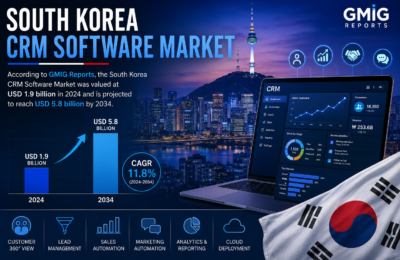
The South Korea CRM software market represents one of the most dynamic and technology-forward customer relationship management ecosystems in the Asia-Pacific region. Valued at USD 1.9 billion in 2024, the market is projected to grow at a compound annual growth rate (CAGR) of approximately 11.8%, reaching USD 5.8 billion by 2034, according to GMI Reports. South Korea’s exceptional digital infrastructure, deep enterprise technology investment culture, and the strategic importance placed on customer experience excellence by its globally competitive corporations collectively underpin this robust growth trajectory.
South Korea possesses some of the world’s most technologically sophisticated corporate environments. The Chaebol conglomerates — Samsung, LG, Hyundai, SK Group, Lotte, and others — operate complex, multinational customer relationship management requirements spanning B2B and B2C contexts across dozens of markets. These large enterprises have historically driven CRM adoption and continue to invest heavily in next-generation platforms integrating artificial intelligence, real-time analytics, and omnichannel engagement capabilities. Simultaneously, South Korea’s vibrant small and medium enterprise (SME) sector and its globally recognized startup ecosystem are generating a new wave of cloud-native CRM adoption.
The convergence of several structural trends is accelerating CRM market growth: the rapid maturation of South Korea’s e-commerce and digital commerce sector; the integration of KakaoTalk and other domestic super-app ecosystems with enterprise CRM workflows; government-backed digital transformation programs for SMEs; and the progressive adoption of AI-powered CRM capabilities including predictive lead scoring, sentiment analysis, and generative AI-assisted customer communication tools.
Market Overview
The South Korea CRM software market encompasses the full spectrum of software solutions designed to manage, analyze, and optimize interactions between organizations and their customers across the entire customer lifecycle. This includes sales force automation (SFA), marketing automation, customer service and support management, field service management, customer analytics, and digital commerce integration platforms.
South Korea’s CRM market is characterized by a dual demand structure. At the enterprise tier, large Chaebol affiliates and major financial institutions, telecommunications companies, and retailers invest in highly customized and deeply integrated CRM platforms capable of handling massive transaction volumes and complex multi-channel customer journeys. At the mid-market and SME tier, cloud-based SaaS CRM adoption is accelerating rapidly as subscription pricing models democratize access to enterprise-grade customer management capabilities.
International CRM vendors including Salesforce, Microsoft Dynamics, SAP, Oracle, and HubSpot compete in the South Korean market alongside a significant domestic software industry that includes companies such as Douzone Bizon, Naver Cloud Platform’s CRM solutions, and Kakao Enterprise’s customer engagement tools. The domestic vendor ecosystem benefits from deep Korean-language capability, local regulatory knowledge, and established relationships with major Chaebol procurement organizations.
The Korea Software Industry Association (KOSA) and the Ministry of Science and ICT (MSIT) both actively promote the adoption of enterprise software including CRM solutions as components of Korea’s Digital New Deal and K-Digital Strategy policy frameworks, providing structural policy support for market growth.
Market Size & Forecast
Market Driving Factors
1. Chaebol Digital Transformation and CRM Modernization
South Korea’s Chaebol conglomerates are executing multi-year digital transformation programs that place CRM modernization at the center of customer experience strategy. Major groups including Samsung C&T, LG CNS, Hyundai Motor Group, and SK Telecom are replacing legacy CRM infrastructure with cloud-native platforms integrated with AI, real-time data analytics, and omnichannel engagement capabilities. These enterprise-scale modernization programs represent high-value, long-duration contracts that drive both software license and professional services revenues for CRM vendors. The complexity of Chaebol affiliate structures, which typically involve numerous subsidiaries sharing customer data across different business lines, creates specific demand for enterprise CRM platforms with sophisticated multi-entity data governance and customer identity resolution capabilities.
2. Hyper-Connected Digital Consumer Base
South Korea has one of the world’s highest smartphone penetration rates and internet connectivity speeds, creating a consumer population that conducts a substantial proportion of its commercial interactions through digital channels. Korean consumers expect seamless omnichannel experiences across mobile, web, in-store, and social commerce touchpoints. This expectation drives CRM investment across retail, financial services, e-commerce, and telecommunications sectors as companies seek to unify customer data and deliver personalized experiences at scale. The dominance of KakaoTalk as a universal communication platform has created unique CRM integration opportunities, with enterprise CRM platforms increasingly incorporating KakaoTalk notification, customer service chatbot, and loyalty program capabilities.
3. E-Commerce and Digital Commerce Expansion
South Korea is consistently ranked among the world’s top three e-commerce markets by per-capita online spending. The rapid growth of domestic e-commerce platforms including Coupang, Naver Shopping, Kakao Commerce, and 11Street has created enormous demand for CRM platforms capable of managing high-volume customer acquisition, retention, and lifecycle management at digital commerce scale. The proliferation of D2C (direct-to-consumer) business models across Korean consumer brands is further driving CRM adoption as companies seek to build proprietary customer relationship capabilities independent of marketplace intermediaries.
4. Financial Services Sector CRM Investment
South Korea’s banking, insurance, and capital markets sectors represent a major and growing CRM demand vertical. Regulatory requirements for customer suitability assessment, Know Your Customer (KYC) compliance, and financial product recommendation transparency are driving investment in CRM platforms with integrated compliance workflows. The rapid growth of Korean fintech, including digital banking platforms such as KakaoBank and Toss, is creating demand for CRM solutions architected for digital-native financial services models. Traditional banks including KB Kookmin, Shinhan, and Woori are investing heavily in CRM modernization to compete with fintech challengers on customer experience quality.
5. Government SME Digitalization Programs
The South Korean government has committed substantial resources to accelerating digital transformation among the country’s SME sector through programs including the K-Digital Credit scheme, the Smart Factory program, and MSIT’s Software Convergence Cluster initiative. These programs provide financial incentives and technical support for SMEs adopting enterprise software including CRM platforms. Government-backed digitalization is significantly expanding the addressable market for cloud-based SME-tier CRM solutions, creating a new growth segment that complements the established enterprise market.
6. AI and Generative AI Integration in CRM Platforms
The integration of artificial intelligence capabilities into CRM platforms is a primary demand driver across all customer segments in South Korea’s market. AI-powered lead scoring, churn prediction models, next-best-action recommendations, and automated customer segmentation are now considered standard capabilities for enterprise CRM deployments. Generative AI applications including AI-assisted sales email composition, customer service response generation, and AI-powered voice of customer analytics are generating significant upgrade and new adoption activity. South Korea’s strong AI research ecosystem, anchored by institutions including KAIST, POSTECH, and NAVER’s AI research center, is contributing to domestic AI-CRM product innovation.
Market Restraining Factors
1. Data Privacy Regulation and Cross-Border Data Flow Restrictions
South Korea’s Personal Information Protection Act (PIPA), administered by the Personal Information Protection Commission (PIPC), imposes stringent requirements on the collection, storage, processing, and transfer of personal data. CRM platforms handling Korean customer data must demonstrate comprehensive PIPA compliance, including data localization requirements in certain sectors, consent management frameworks, and breach notification obligations. For international CRM vendors, the compliance burden associated with PIPA creates implementation complexity and cost that can extend sales cycles and increase total cost of ownership.
2. Dominance of Established Domestic IT Service Providers
Large Korean IT service companies including Samsung SDS, LG CNS, SK C&C, and Lotte Data Communication Company have deep incumbent positions within Chaebol affiliate IT supply chains. These captive IT service relationships can create procurement preferences for CRM solutions endorsed or integrated by affiliated IT service providers, creating barriers for independent CRM vendors — both domestic and international — seeking to penetrate Chaebol accounts. The preference for integrated IT service relationships over best-of-breed software selection can slow the adoption of leading independent CRM platforms.
3. Integration Complexity with Legacy Enterprise Systems
Many large Korean enterprises maintain substantial legacy ERP, billing, and operational system infrastructure that predates modern cloud-native architectures. Integrating contemporary CRM platforms with these legacy environments requires significant custom development, middleware investment, and ongoing integration maintenance, substantially increasing implementation costs and timelines. The complexity of Chaebol affiliate IT landscapes, which may include hundreds of interconnected systems across dozens of subsidiaries, amplifies integration challenges and can extend CRM deployment projects by months or years.
4. Intense Price Competition in the SME Segment
The SME CRM market in South Korea is characterized by intense price competition among a large number of domestic and international cloud CRM providers. Aggressive pricing strategies by international vendors seeking Korean market share and the availability of freemium CRM products compress revenue per customer in the SME segment. Customer churn rates in the SME CRM segment are higher than in enterprise, driven by switching ease and price sensitivity, creating ongoing customer acquisition cost challenges for CRM vendors focused on this segment.
Market Segmentation
By Component
Software remains the dominant market component, encompassing CRM platform licenses and SaaS subscriptions across all deployment models. Professional services — including implementation, customization, integration, and training — represent a significant and growing component as enterprises deploy increasingly complex CRM configurations integrated with AI, analytics, and omnichannel engagement infrastructure. Managed services are expanding as mid-market organizations seek to outsource ongoing CRM administration and optimization to specialist providers.
By Deployment Mode
Cloud-based CRM deployment is undergoing accelerated adoption across all customer segments, driven by total cost of ownership advantages, faster time-to-value, and the superior AI and analytics capabilities available on cloud-native platforms. On-premise deployment retains a significant share among large enterprises with stringent data security requirements and financial institutions subject to sectoral data residency obligations. The hybrid segment serves organizations managing transition from legacy on-premise CRM environments to cloud architectures.
By Organization Size
By Industry Vertical
By CRM Type
Competitive Landscape
The South Korea CRM software market is served by a combination of leading international platform vendors, major Korean IT conglomerates with CRM portfolio offerings, and a growing domestic SaaS startup ecosystem. The competitive dynamic is shaped by the coexistence of enterprise accounts with complex procurement processes tied to Chaebol IT affiliates and a large and rapidly growing SME segment accessible through direct digital sales channels.
Regional Analysis
CRM software adoption in South Korea is geographically concentrated in the Seoul Capital Area (Seoul, Incheon, and Gyeonggi-do), reflecting the extreme centralization of South Korean corporate headquarters, financial institutions, and technology companies in the metropolitan region. However, regional industrial clusters in other cities generate meaningful CRM demand tied to specific industry verticals.
Regulatory and Policy Environment
The South Korean regulatory environment for CRM software is shaped primarily by data protection legislation, ICT sector policy, and industry-specific compliance requirements that directly influence CRM platform design, data handling practices, and vendor selection criteria.
Personal Information Protection Act (PIPA)
PIPA, substantially revised and strengthened in 2020 and further amended in 2023, is the cornerstone data protection framework governing CRM platform operations in South Korea. PIPA establishes requirements for lawful basis of personal data processing, data subject rights including access, correction, and deletion, mandatory data breach notification within 24 hours to the PIPC and affected individuals, and restrictions on international data transfers. CRM vendors operating in South Korea must implement comprehensive PIPA compliance frameworks, including designated Personal Information Protection Officers (PIPO), privacy impact assessments, and technical and administrative safeguards. PIPA compliance capability has become a critical vendor selection criterion for Korean enterprise CRM buyers.
Network Act and Cloud Security
The Act on Promotion of Information and Communications Network Utilization and Information Protection imposes additional cybersecurity requirements on cloud service providers, including CRM SaaS vendors, operating in South Korea. The Korea Internet & Security Agency (KISA) administers Information Security Management System (ISMS) certification, which major CRM vendors operating in Korea are expected to obtain. Financial sector CRM deployments are subject to additional Financial Security Institute (FSI) guidelines governing cloud service adoption by regulated financial institutions.
K-Digital Strategy and SME Digitalization Policy
The Ministry of Science and ICT’s K-Digital Strategy designates enterprise software and cloud adoption as strategic national priorities. The Korea SME and Startups Agency (KOSME) administers various subsidy and loan programs supporting SME enterprise software adoption including CRM. These policy instruments expand the effective addressable market for CRM vendors by subsidizing adoption among cost-sensitive SME customers who might not otherwise invest in dedicated CRM platforms.
Emerging Market Trends
Super-App CRM Integration (KakaoTalk & Naver)
The integration of CRM platforms with South Korea’s dominant super-app ecosystems — KakaoTalk with over 47 million monthly active users domestically and Naver’s suite of commercial services — represents a uniquely Korean market development. Enterprise CRM platforms that offer native integration with KakaoTalk Business Messaging, KakaoSync customer identification, and Naver CRM APIs can deliver omnichannel customer engagement capabilities that are deeply embedded in Korean consumer behavior. This integration advantage represents a meaningful competitive differentiator for domestic CRM vendors and a critical localization requirement for international platforms seeking Korean market penetration.
AI-Powered Hyper-Personalization
South Korean enterprises are investing heavily in AI-powered hyper-personalization capabilities within their CRM platforms, driven by consumer expectations shaped by some of the world’s most sophisticated digital retail and entertainment platforms. Real-time next-best-offer engines, AI-generated personalized content, dynamic pricing integration, and predictive customer lifetime value models are being deployed at scale by leading Korean retailers, financial institutions, and telecommunications companies. Korean CRM vendors and technology partners are developing AI models specifically trained on Korean consumer behavior datasets, offering localization advantages over generic global AI CRM capabilities.
Mobile-First CRM for Field Sales and Service Teams
South Korea’s overwhelmingly mobile-first digital culture is driving strong adoption of mobile CRM applications among sales and field service workforces. Sales force automation platforms with rich mobile functionality — offline capability, voice input, location-based customer intelligence, and integrated video calling — are experiencing rapid adoption among Korean field sales organizations across FMCG, pharmaceutical, financial services, and B2B technology verticals. The high quality of South Korea’s 5G network infrastructure, with the world’s highest 5G penetration rate, enables particularly capable mobile CRM experiences that leverage real-time data synchronization and AI-assisted selling tools.
CRM and ERP Convergence
The convergence of CRM and ERP capabilities within unified enterprise platform suites is a significant trend reshaping Korean enterprise software procurement. Major Korean enterprises are increasingly seeking to consolidate fragmented point solutions onto integrated platforms that provide a single data foundation spanning finance, supply chain, HR, and customer management. This convergence trend benefits integrated suite vendors including SAP, Microsoft, and Oracle while creating challenges for standalone CRM specialists. Korean domestic ERP vendors including Douzone Bizon and Youngsin Software are expanding their CRM capabilities to offer more comprehensive platform alternatives to international suites.
Subscription Economy and Loyalty Platform Integration
South Korea’s rapidly maturing subscription commerce ecosystem — spanning streaming services, meal kit delivery, beauty boxes, and digital content subscriptions — is generating specialized CRM requirements focused on subscriber lifecycle management, churn prediction, and loyalty program integration. CRM platforms serving Korean subscription businesses must handle complex recurring revenue recognition, subscriber engagement scoring, and win-back campaign automation. The maturation of South Korea’s loyalty program market, driven by major retailers, airlines, and credit card companies, is creating demand for CRM platforms with sophisticated multi-tier loyalty management and reward redemption integration capabilities.
Key Companies in the South Korea CRM Software Market
-
Salesforce Korea
-
Microsoft Korea (Dynamics 365)
-
SAP Korea (SAP CX)
-
Oracle Korea (Oracle CX Cloud)
-
HubSpot Korea
-
Kakao Enterprise
-
Naver Cloud Platform (CRM Solutions)
-
Douzone Bizon
-
NHN Cloud
-
Samsung SDS (Brightics AI CRM)
-
LG CNS (CRM Practice)
-
SK C&C (CRM & Customer Experience Solutions)
-
Salesmanago Korea
-
Crownix (Domestic CRM Solutions)
-
Other Korean and International CRM Vendors
Report Target Audience
-
CRM Software Vendors and Technology Companies
-
Chaebol IT Affiliates and Korean Enterprise Software Providers
-
Private Equity, Venture Capital, and Technology Investors
-
Chief Information Officers and IT Decision-Makers
-
Chief Marketing Officers and Customer Experience Leaders
-
Financial Services, Retail, and Telecommunications Companies
-
Management and Strategy Consultants in Technology and Korea
-
Government Bodies (MSIT, KISA, KOSME)
-
International Technology Companies Evaluating Korean Market Entry
-
Academic Researchers in Enterprise Software and Digital Transformation
Market Segmentation Summary
By Component
-
Software
-
Professional Services
-
Managed Services
By Deployment Mode
-
Cloud-Based (SaaS / PaaS)
-
On-Premise
-
Hybrid
By Organization Size
-
Large Enterprises
-
Small and Medium Enterprises (SMEs)
By Industry Vertical
-
Banking, Financial Services and Insurance (BFSI)
-
Retail and E-Commerce
-
Telecommunications and Media
-
Manufacturing and Automotive
-
IT and Technology Services
-
Healthcare and Life Sciences
-
Government and Public Sector
-
Other Verticals
By CRM Type
-
Sales Force Automation (SFA)
-
Marketing Automation
-
Customer Service and Support
-
Field Service Management
-
Customer Analytics and AI
By Region
-
Seoul Metropolitan Area
-
Gyeonggi-do
-
Busan and South Gyeongsang
-
Daegu and North Gyeongsang
-
Daejeon and Sejong
-
Other Regions
About GMI Reports
GMI Reports is a leading global market intelligence and research organization delivering comprehensive data-driven insights and strategic analysis across industries worldwide. Our enterprise technology research practice provides authoritative coverage of software markets across Asia-Pacific, including South Korea’s dynamic digital economy. For the South Korea CRM Software Market report, related Asia-Pacific technology research, or customized market intelligence solutions, please visit www.gmigreports.com.
www.gmigreports.com