MARKET RESEARCH REPORT
Japan Cups and Mugs Market
Insights, Analysis & Forecasts to 2034
Published by GMI Reports | www.gmigreports.com
Executive Summary
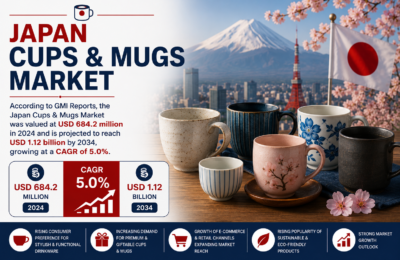
The Japan cups and mugs market represents a mature yet continuously evolving segment of the country’s broader tableware and houseware industry, characterized by deep-rooted craft traditions, exceptional product design sensibility, and steady consumer demand for both functional and gift-oriented drinkware. Valued at USD 684.2 million in 2024, the market is projected to grow at a CAGR of approximately 5.0%, reaching USD 1.12 billion by 2034, according to GMI Reports.
Japan’s cups and mugs market is distinguished globally by its unique convergence of centuries-old ceramic craftsmanship traditions, exemplified by regional pottery styles such as Arita-yaki, Mino-yaki, and Hagi-yaki, alongside a highly developed contemporary design and character merchandising industry. This duality creates a market structure spanning traditional artisanal teaware, everyday functional mugs, premium designer drinkware, and an extensive character and collaboration goods segment tied to Japan’s globally influential anime, gaming, and pop culture industries.
Ceramic and porcelain cups continue to dominate by volume and value, supported by Japan’s enduring tea and coffee drinking culture. However, double-wall insulated stainless steel mugs and tumblers have emerged as the fastest-growing product category, driven by rising convenience store coffee culture, office and remote work beverage habits, and consumer demand for temperature-retention functionality. Gift-giving culture, seasonal corporate gifting (o-chugen and o-seibo), and tourism-driven souvenir purchases continue to provide structurally important demand support across the market.
Market Overview
The Japan cups and mugs market encompasses the manufacturing, importation, distribution, and retail of drinkware products including ceramic teacups, coffee mugs, insulated tumblers, glass cups, and traditional Japanese teaware vessels such as yunomi and chawan. The market is shaped by Japan’s distinctive tea ceremony heritage, its globally recognized contemporary coffee culture, and a houseware retail landscape that spans traditional craft shops, department stores, specialty homeware retailers, convenience stores, and a rapidly growing e-commerce channel.
Japan’s ceramic production heritage, anchored in regional centers including Arita in Saga Prefecture, Mino in Gifu Prefecture, Seto in Aichi Prefecture, and Kyoto’s Kiyomizu-yaki tradition, provides the domestic manufacturing market with both historical credibility and ongoing innovation capacity. These regional ceramic clusters combine traditional techniques with contemporary design collaboration, producing products that command premium positioning in both domestic and export markets. Simultaneously, Japan’s manufacturing sector has developed sophisticated double-wall vacuum insulation technology, with several Japanese brands recognized as global category leaders in insulated drinkware engineering.
Japan’s coffee culture has matured substantially over the past two decades, evolving from instant coffee dominance to a sophisticated specialty coffee and convenience store coffee ecosystem. This shift has materially expanded mug and tumbler demand beyond traditional tea-drinking occasions. Concurrently, character goods and intellectual property collaboration merchandise, leveraging Japan’s anime, manga, gaming, and idol culture industries, represent a commercially significant and culturally distinctive segment of the cups and mugs market not found at comparable scale in other national markets.
Market Size & Forecast
Market Driving Factors
1. Sustained Tea and Coffee Consumption Culture
Japan maintains one of the highest per-capita beverage consumption rates globally, spanning traditional green tea, black tea, and an increasingly sophisticated coffee culture. The proliferation of specialty coffee shops, convenience store premium coffee programs from chains including 7-Eleven and Lawson, and home brewing equipment adoption have collectively sustained strong baseline demand for mugs and cups across virtually all demographic segments. Seasonal beverage trends and limited-edition flavor launches by major beverage chains further stimulate periodic replacement and collection purchasing behavior.
2. Character Goods and Intellectual Property Merchandising
Japan’s globally dominant anime, manga, and character licensing industry generates substantial demand for branded and collaboration drinkware. Popular franchises regularly release limited-edition mug and cup collections through retail partnerships, theme cafes, and direct-to-consumer e-commerce. This phenomenon extends beyond children’s character merchandise into adult-oriented collectible and idol fan culture markets, creating a uniquely Japanese commercial dynamic in which drinkware functions simultaneously as a beverage vessel and a fan culture collectible item with secondary resale value.
3. Insulated Drinkware and On-the-Go Consumption Trends
Rising adoption of vacuum-insulated stainless steel tumblers and travel mugs reflects changing Japanese commuting and workplace beverage consumption patterns. Long commute times in major metropolitan areas, increasing remote and hybrid work arrangements, and growing environmental consciousness around single-use cup reduction have collectively driven strong growth in the reusable insulated mug category. Japanese manufacturers’ engineering excellence in vacuum insulation technology has positioned domestic brands as both leaders in the home market and significant exporters to international markets.
4. Gift-Giving Culture and Seasonal Corporate Gifting
Japan’s deeply embedded gift-giving traditions, including the mid-year o-chugen and year-end o-seibo corporate and personal gifting seasons, generate substantial structural demand for premium cups and mugs as gift items. Wedding favors (hikihikimono), housewarming gifts, and seasonal greeting gifts frequently incorporate quality ceramic or glassware drinkware. This gifting culture supports premium price positioning and sustains demand for designer and craft-attributed drinkware that might otherwise face commoditization pressure in purely functional retail contexts.
5. Inbound Tourism and Souvenir Demand
Japan’s record-breaking inbound tourism recovery has generated substantial souvenir demand for traditional ceramic cups and regionally distinctive drinkware. International visitors frequently purchase Arita-yaki, Kutani-yaki, and other named regional ceramic styles as premium souvenirs and gifts. Department stores, airport retail, and tourist-area craft shops have expanded curated drinkware selections specifically targeting this visitor segment, while several traditional ceramic producers have developed export-oriented product lines and English-language packaging to capture this growing revenue stream.
6. Premiumization and Designer Collaboration Products
Japanese consumers exhibit strong willingness to pay premium prices for cups and mugs that combine functional quality with distinctive design credentials. Collaborations between traditional ceramic producers and contemporary designers, as well as partnerships with well-known lifestyle and homeware brands, have created a vibrant premium product tier. This premiumization trend is particularly pronounced among design-conscious urban consumers who view quality drinkware as an expression of personal aesthetic values and lifestyle curation.
Market Restraining Factors
1. Demographic Decline and Shrinking Household Formation
Japan’s persistent demographic challenges, including a declining and aging population and decreasing household formation rates, present a structural headwind for cups and mugs demand. Smaller household sizes reduce aggregate per-household drinkware purchasing relative to historical multi-generational household patterns. The shrinking working-age population also constrains overall consumer spending capacity across discretionary homeware categories.
2. Market Maturity and Replacement-Driven Demand
As an already highly developed and saturated consumer market, Japan’s cups and mugs category is predominantly driven by replacement and gift purchasing rather than first-time household formation demand. This maturity constrains overall volume growth potential and places greater emphasis on premiumization, design differentiation, and collectible/character goods strategies as primary growth levers, rather than relying on expanding the base consumer population.
3. Rising Raw Material and Energy Costs
Japanese ceramic manufacturers face elevated production costs associated with kiln energy consumption, particularly amid Japan’s broader energy price volatility following global supply disruptions. Imported raw materials including specialized clays and glazing compounds are subject to currency exchange rate fluctuations. These cost pressures are particularly challenging for smaller traditional ceramic producers who lack the production scale to absorb cost increases without significant price adjustments that may affect competitiveness.
4. Competition from Low-Cost Imported Products
Mass-market and budget-tier cups and mugs imported primarily from China and other Asian manufacturing centers exert pricing pressure on Japan’s domestic mid-tier producers. While Japan’s premium and craft-heritage segments remain relatively insulated due to strong brand and provenance differentiation, the functional everyday mug segment faces ongoing margin compression from low-cost import competition, particularly through value-oriented retail channels and 100-yen shops.
Market Segmentation
By Material
Ceramic and porcelain cups retain the dominant market position, supported by Japan’s deep cultural association between fine ceramics and quality beverage experiences, alongside the craft heritage value embedded in regional pottery traditions. Stainless steel insulated drinkware is the fastest-growing material segment, driven by functional performance advantages and alignment with sustainability-conscious reusable container trends.
By Product Type
By Price Tier
By Distribution Channel
Online and e-commerce represent the fastest-growing distribution channel, accelerated by major platforms including Rakuten and Amazon Japan, alongside direct-to-consumer sales channels operated by traditional ceramic producers seeking to reach younger and geographically dispersed consumers. Convenience stores have also expanded their drinkware offerings, particularly insulated tumblers and seasonal collaboration mugs, leveraging their extensive nationwide footprint and high foot traffic.
By End-User
Competitive Landscape
The Japan cups and mugs market features a distinctive competitive structure combining centuries-old regional ceramic producers, large diversified houseware manufacturers, specialized insulated drinkware engineering companies, and licensors of character merchandise. Market fragmentation is notable at the artisanal and regional craft level, while the insulated drinkware and mass-market mug segments exhibit greater concentration among established manufacturers.
Regional Analysis
Japan’s cups and mugs market exhibits distinctive regional production clusters alongside concentrated consumption demand in major metropolitan retail markets. The Kanto and Kansai regions drive the largest consumption volumes, while specific prefectures maintain globally recognized status as traditional ceramic production centers.
Emerging Market Trends
Sustainability and Reusable Drinkware Adoption
Japan’s regulatory measures targeting single-use plastic reduction, combined with growing consumer environmental consciousness, are driving increased adoption of durable, reusable cups and mugs as alternatives to disposable cups at convenience stores and cafes. Several major retail chains have introduced reusable cup discount programs, incentivizing consumers to bring personal drinkware for in-store coffee purchases, which has expanded demand for portable, durable mug and tumbler designs suited to daily carry use.
Theme Cafe and Experiential Retail Collaboration
Japan’s distinctive theme cafe culture, featuring character, anime, and brand-collaboration pop-up cafes, generates significant exclusive drinkware merchandise sales tied to limited-time dining experiences. These collaborations create powerful scarcity-driven purchasing behavior, with collectible mugs frequently reselling at premium prices in Japan’s robust secondary collectibles market. This trend continues to expand as international franchises increasingly partner with Japanese theme cafe operators to access this commercially distinctive merchandising model.
Artisan Revival and Younger Generation Craft Appreciation
A notable trend among younger Japanese consumers involves renewed appreciation for traditional handcrafted ceramics, often discovered through social media and lifestyle content rather than traditional craft retail channels. Younger ceramic artisans in regions including Hasami and Shigaraki are successfully modernizing traditional techniques with contemporary aesthetics, attracting a demographic that might otherwise have been disengaged from traditional craft pottery, and supporting succession planning challenges facing aging artisan communities.
Smart and Functional Drinkware Innovation
Japanese manufacturers are increasingly incorporating advanced functional features into cups and mugs, including improved thermal retention engineering, app-connected temperature monitoring for premium tumbler products, and ergonomic designs optimized for specific beverage types such as pour-over coffee or matcha preparation. This functional innovation trend reflects Japan’s broader manufacturing culture of continuous incremental product refinement and provides differentiation opportunities in an otherwise mature product category.
Direct-to-Consumer and Regional Producer E-Commerce
Traditional regional ceramic producers, historically dependent on wholesale distribution through department stores and craft retailers, are increasingly establishing direct e-commerce operations to reach consumers nationally and internationally. This channel shift allows smaller producers to capture greater margin, build direct brand relationships, and access export markets without intermediary distribution costs, representing a structural evolution in how Japan’s traditional ceramic industry engages with contemporary retail dynamics.
Key Companies in the Japan Cups and Mugs Market
-
Thermos (Thermos K.K.)
-
Zojirushi Corporation
-
Tiger Corporation
-
Noritake Co., Limited
-
Narumi Corporation
-
Arita-yaki Heritage Producers
-
Mino-yaki Producers Association
-
Hasami Ware Contemporary Studios
-
Sanrio Co., Ltd. (Character Licensing)
-
MUJI (Ryohin Keikaku Co., Ltd.)
-
Francfranc Corporation
-
Iittala Japan (Import Distribution)
-
Kinto Co., Ltd.
-
Hario Co., Ltd.
-
Other Regional and Independent Ceramic Studios
Report Target Audience
-
Ceramic and Houseware Manufacturers
-
Retail Chains and Department Store Buyers
-
Character Licensing and Merchandising Companies
-
Hospitality and Foodservice Procurement Teams
-
E-Commerce Platform Operators and DTC Brands
-
Tourism Boards and Souvenir Retail Operators
-
Private Equity and Consumer Goods Sector Investors
-
Design Studios and Brand Collaboration Partners
-
Academic Researchers in Craft Industries and Consumer Behavior
-
Export and Trade Promotion Organizations
Market Segmentation Summary
By Material
-
Ceramic and Porcelain
-
Stainless Steel (Insulated)
-
Glass
-
Plastic and Melamine
By Product Type
-
Coffee Mugs
-
Traditional Teacups (Yunomi/Chawan)
-
Insulated Tumblers and Travel Mugs
-
Character and Collaboration Mugs
-
Glass Cups and Tumblers
By Price Tier
-
Mass Market / Value
-
Mid-Tier
-
Premium / Craft
By Distribution Channel
-
Department Stores
-
Specialty Homeware Chains
-
Online and E-Commerce
-
Convenience Stores
-
Craft and Souvenir Shops
-
Supermarkets and Discount Retail
By End-User
-
Household / Individual Consumers
-
Gifting / Corporate
-
HoReCa (Cafes, Hotels, Restaurants)
By Region
-
Kanto (Tokyo area)
-
Kansai (Osaka/Kyoto)
-
Chubu (Aichi/Gifu)
-
Kyushu (Saga/Nagasaki)
-
Tohoku
-
Hokkaido
-
Other Regions
About GMI Reports
GMI Reports is a leading market intelligence and research organization providing comprehensive, data-driven insights across consumer goods, houseware, and lifestyle industries worldwide. Our Japan Cups and Mugs Market report combines primary research with retail trade data, manufacturer interviews, and regional craft industry analysis to deliver actionable intelligence for strategic decision-making.
For further information, customized research services, or licensing inquiries related to this or other market reports, please visit www.gmigreports.com.
www.gmigreports.com