MARKET RESEARCH REPORT
India Cosmetics Market
Insights, Analysis & Forecasts to 2034
Published by GMI Reports | www.gmigreports.com
Executive Summary
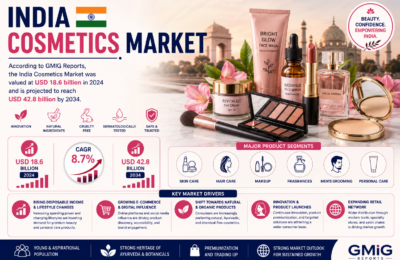
The India cosmetics market was valued at USD 18.6 billion in 2024 and is projected to grow at a compound annual growth rate (CAGR) of approximately 8.7%, reaching USD 42.8 billion by 2034, according to GMI Reports. India has emerged as one of the world’s most strategically important and fastest-growing cosmetics markets, propelled by a vast and youthful consumer base, rapid urbanization driving beauty product awareness and aspiration, rising female workforce participation, growing disposable incomes across middle-class households, and the transformative influence of social media and digital content creators on beauty culture and consumption behavior.
India’s cosmetics market is distinguished by its distinctive dual demand structure encompassing both a vibrant market for internationally branded premium products catering to aspirational urban consumers and a massive opportunity in accessible, value-positioned domestic brands serving the enormous rural and semi-urban consumer population being progressively incorporated into organized cosmetics retail for the first time. This market duality creates simultaneous opportunities for both multinational luxury beauty brands and domestic mass-market beauty companies.
The market additionally benefits from India’s deep cultural tradition of beauty and personal grooming rooted in Ayurvedic and herbal ingredient heritage, which has created strong consumer receptiveness to natural and herbal cosmetic formulations. Indian-origin brands including Patanjali, Himalaya, and a growing ecosystem of Ayurvedic-positioned new-age beauty startups have successfully leveraged this heritage positioning to build substantial market shares competing effectively against international cosmetics brands across multiple product categories.
Market Overview
The India cosmetics market encompasses skin care, hair care, color cosmetics, fragrances, personal hygiene, and oral care products sold through organized retail including modern trade, pharmacy and beauty specialty chains, and the rapidly growing e-commerce channel, alongside the still-significant traditional general trade distribution network of kiranas and beauty parlors serving semi-urban and rural consumer segments.
India’s cosmetics regulatory environment is governed by the Cosmetics Rules 2020 under the Drugs and Cosmetics Act, administered by the Central Drugs Standard Control Organization. Recent regulatory modernization has streamlined product registration and import procedures while strengthening safety assessment requirements, creating a more predictable and transparent regulatory framework supporting both domestic product innovation and international brand market entry.
The market structure is characterized by intense competition between multinational beauty conglomerates, including Hindustan Unilever, L’Oréal India, Procter & Gamble, and Colgate-Palmolive, alongside a large and vibrant domestic brand ecosystem led by companies including Emami, Marico, Bajaj Consumer Care, and an expanding wave of digitally-native direct-to-consumer Indian beauty brands. The direct-to-consumer beauty brand segment has experienced particularly rapid growth, leveraging social commerce platforms, influencer marketing, and digital customer acquisition to build significant consumer followings with lower capital investment than traditional organized retail distribution models.
Market Size & Forecast
Market Driving Factors
1. Large and Rapidly Growing Young Consumer Population
India’s demographic profile, with over 600 million people under 25 years of age, provides the cosmetics market with an exceptionally large and continuously expanding young consumer base entering peak cosmetics adoption and spending phases. This demographic dividend, combined with increasing youth exposure to beauty content through social media, is generating sustained first-time cosmetics category adoption across a broad range of product categories from color cosmetics to premium skin care.
2. Rapid Urbanization and Aspiration-Driven Consumption
India’s continued rapid urbanization, with an estimated 40% of the population projected to reside in urban areas by 2030, is progressively exposing previously rural consumer populations to organized cosmetics retail, beauty service infrastructure, and urban beauty culture influences that collectively drive new cosmetics category adoption. Rising urban aspirations and beauty consciousness among India’s growing urban middle class continue to support premium product segment growth alongside mass-market expansion.
3. Rising Female Workforce Participation and Economic Empowerment
Growing female workforce participation across India’s expanding formal employment sector has simultaneously increased women’s disposable income available for discretionary beauty spending and elevated professional grooming and appearance consciousness motivating cosmetics category investment. This female economic empowerment trend is particularly significant in metro and tier-1 cities where professional employment growth is most concentrated and beauty market development is most advanced.
4. Social Media and Beauty Content Creator Influence
India’s massive and rapidly growing social media user base, combined with a vibrant domestic beauty content creator ecosystem producing makeup tutorials, skincare routines, and product reviews in regional languages, has dramatically accelerated beauty product awareness, trial motivation, and purchase conversion among consumers across diverse geographic and socioeconomic segments. Platforms including Instagram, YouTube, and increasingly Meesho and ShareChat-linked social commerce channels are transforming India’s cosmetics purchase discovery and decision journey.
5. E-Commerce and Quick Commerce Distribution Expansion
The explosive growth of e-commerce cosmetics distribution through platforms including Nykaa, Amazon India, Flipkart, and the emerging quick-commerce channel via Blinkit, Zepto, and Swiggy Instamart has dramatically expanded organized cosmetics retail accessibility beyond metropolitan areas into tier-2 and tier-3 city markets. This digital distribution democratization has enabled both international premium brands and domestic emerging brands to reach consumers previously inaccessible through traditional organized retail infrastructure.
6. Natural, Herbal, and Ayurvedic Positioning Market Strength
India’s unique cultural heritage of Ayurvedic and natural beauty traditions has created a strongly differentiated domestic market preference for naturally-positioned cosmetic products that both domestic brands and international companies have actively leveraged in product development and positioning strategy. This natural beauty preference has supported market development for herbal formulations, botanical ingredient-led products, and Ayurvedic beauty brands, broadening the competitive landscape and maintaining domestic brand competitiveness against international entrants.
Market Restraining Factors
1. Price Sensitivity and Mass Market Affordability Constraints
The substantial majority of India’s consumer population remains highly price sensitive in cosmetics purchasing decisions, limiting premium product penetration beyond urban affluent consumer segments and constraining average selling price growth across mass-market product categories. The coexistence of extremely price-sensitive rural and semi-urban markets alongside aspirational urban premium markets creates complex segmentation requirements and margin management challenges for cosmetics brands seeking to serve the full market breadth.
2. Counterfeit Product Prevalence and Brand Dilution
India’s cosmetics market faces significant counterfeit product proliferation, particularly within online marketplace platforms and informal retail channels, with fake versions of popular domestic and international beauty brands creating consumer trust challenges and revenue diversion from legitimate manufacturers. Counterfeit products also pose genuine consumer safety risks from unregulated ingredient use, occasionally generating negative product category associations that can affect legitimate brand perception.
3. Diverse Regional Consumer Preferences and Skin Tone Complexity
India’s enormous geographic and cultural diversity creates complex consumer preference variation across regions, skin tones, and cultural beauty traditions that makes national product standardization challenging. Cosmetics brands must invest substantially in regionalized product development, particularly for color cosmetics where India’s diverse skin tone spectrum spanning light to deep requires significantly broader shade range development than many international markets.
4. Regulatory Complexity and Import Compliance Requirements
While India’s cosmetics regulatory framework has been modernized, compliance complexity for imported cosmetics remains meaningful, including mandatory product registration, BIS certification requirements for certain product categories, and import licensing processes that can extend product launch timelines and increase market entry costs for international brands seeking to introduce new product lines into the Indian market.
Market Segmentation
By Product Category
Skin care retains the leading and expanding product category market share, driven by growing consumer investment in facial moisturization, sun protection, and anti-aging skin care across both mass and premium market segments. Color cosmetics represents the fastest-growing category, reflecting the strong influence of social media beauty content and growing Indian consumer confidence in color cosmetics experimentation and self-expression across diverse occasions.
By Distribution Channel
General trade retains the largest distribution channel share by geographic reach and volume, serving the vast semi-urban and rural consumer base through neighborhood kirana stores and pharmacy counters. E-commerce and social commerce channels are exhibiting the highest growth rate, driven by Nykaa’s dominant beauty e-commerce positioning and the rapid expansion of quick-commerce beauty product delivery within urban markets.
By Gender
Competitive Landscape
The India cosmetics market features intense competition among established multinational beauty conglomerates with decades of Indian market investment, vibrant domestic beauty companies leveraging Ayurvedic heritage and value positioning, and a rapidly expanding cohort of digitally-native direct-to-consumer Indian beauty startups. Competitive differentiation increasingly centers on India-specific formulation relevance, inclusive shade range development, regional language marketing, and digital community building.
Regional Analysis (Within India)
India’s cosmetics market exhibits significant regional variation in consumer preference, product category penetration, and distribution channel development, reflecting the country’s diverse cultural beauty traditions, income levels, and organized retail infrastructure maturity across different geographic regions.
Emerging Market Trends
Direct-to-Consumer Beauty Brand Ecosystem Explosion
India is experiencing an extraordinary explosion of digitally-native direct-to-consumer beauty brands, including Minimalist, Sugar Cosmetics, mCaffeine, Dot & Key, and hundreds of emerging brands, leveraging social media, influencer partnerships, and e-commerce platforms to build substantial consumer followings with significantly lower marketing investment than traditional brand-building approaches. This DTC brand wave is reshaping competitive dynamics across multiple cosmetics categories and accelerating product innovation pace.
Men’s Grooming Category Rapid Expansion
India’s men’s grooming cosmetics market is experiencing one of the fastest growth rates within the broader cosmetics market, driven by rising male grooming consciousness among younger Indian men influenced by social media grooming content, growing professional appearance investment, and the destigmatization of cosmetics use among male consumers. Dedicated men’s skincare, beard care, and color cosmetics for men brands are proliferating across both domestic and international market entrants.
Inclusive Shade Range and Diverse Representation Push
Growing consumer demand and advocacy for genuine shade inclusion across India’s diverse skin tone spectrum is compelling cosmetics brands to substantially expand color cosmetics shade ranges, foundation formulations, and marketing representation beyond the historically narrow skin tone representation common in Indian cosmetics marketing. Brands demonstrating authentic commitment to India’s skin tone diversity are gaining meaningful brand preference advantages among younger, socially conscious consumer segments.
Clean Beauty and Ingredient Transparency Movement
A growing clean beauty movement among urban Indian consumers, emphasizing ingredient transparency, chemical-free or free-from formulation positioning, and cruelty-free certification, is reshaping product development priorities across skin care and color cosmetics categories. Indian clean beauty startups are gaining traction by combining Ayurvedic ingredient heritage with modern clean beauty formulation standards appealing to both traditional and contemporary Indian consumer sensibilities.
Quick Commerce Beauty Delivery Revolution
The rapid expansion of quick-commerce platforms including Blinkit, Zepto, and Swiggy Instamart into beauty product delivery, offering 10-to-30-minute delivery of cosmetics within metro areas, is fundamentally reshaping the beauty purchase occasion within urban markets. This convenience channel is capturing impulse and top-up beauty purchasing occasions previously served by modern trade retail and creating new competitive pressures for traditional beauty retail channels.
Key Companies in the India Cosmetics Market
-
Hindustan Unilever Limited
-
L’Oréal India Private Limited
-
Procter & Gamble India
-
Emami Limited
-
Marico Limited
-
Patanjali Ayurved Limited
-
Nykaa (FSN E-Commerce Ventures)
-
Himalaya Drug Company
-
Sugar Cosmetics
-
Minimalist (Uprising Science)
-
Bajaj Consumer Care
-
Colgate-Palmolive India
Report Target Audience
-
Cosmetics Manufacturers and Brand Owners
-
Retailers and E-commerce Platform Operators
-
Investment and Private Equity Firms
-
Beauty Ingredient Suppliers
-
Digital Marketing and Influencer Agencies
-
Government Regulatory and Trade Policy Bodies
-
Management and Strategy Consultants
-
Academic Researchers in Consumer Behavior and FMCG
Market Segmentation Summary
By Product Category
-
Skin Care
-
Hair Care
-
Color Cosmetics
-
Fragrances
-
Oral Care
By Distribution Channel
-
General Trade (Kiranas & Chemists)
-
E-commerce & Social Commerce
-
Modern Trade (Supermarkets, Malls)
-
Beauty Specialty Stores
-
Direct Selling
By Gender
-
Female
-
Male
-
Unisex/Gender-Neutral
By Region (Within India)
-
West (Maharashtra, Gujarat)
-
South (Tamil Nadu, Karnataka, Andhra Pradesh, Kerala, Telangana)
-
North (Delhi NCR, Uttar Pradesh, Punjab)
-
East (West Bengal, Odisha, Bihar)
-
Central (Madhya Pradesh, Rajasthan)
About GMI Reports
GMI Reports is a premier market intelligence and research organization providing data-driven insights and strategic analysis across global beauty, personal care, and consumer goods markets. Our research empowers brands, retailers, and investors to navigate the evolving India cosmetics landscape with confidence. For the India Cosmetics Market report and related research, visit www.gmigreports.com or contact our research team for customized intelligence solutions.
www.gmigreports.com
© 2025 GMI Reports. All Rights Reserved. Unauthorized reproduction or distribution is strictly prohibited.