MARKET RESEARCH REPORT
United States Durable Medical Equipment Market
Insights, Analysis & Forecasts to 2034
Published by GMI Reports | www.gmigreports.com
Executive Summary
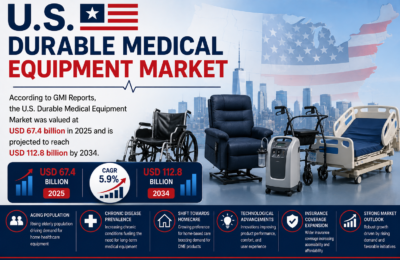
The United States durable medical equipment market was valued at USD 67.4 billion in 2025 and is projected to grow at a compound annual growth rate (CAGR) of approximately 5.9% from 2026 to 2034, reaching USD 112.8 billion by 2034, according to GMI Reports. This sustained growth trajectory is anchored by the country’s rapidly aging population, rising prevalence of chronic diseases requiring ongoing home-based care, and the continued structural shift of healthcare delivery from inpatient hospital settings toward home and outpatient care environments.
Mobility aids and home medical equipment, including wheelchairs, walkers, and hospital beds, represent the largest product category by revenue, reflecting sustained demand from the elderly and disabled population segments alongside growing post-acute and rehabilitative care utilization. Respiratory equipment has experienced particularly notable growth momentum, propelled by rising chronic respiratory disease prevalence and expanding home oxygen therapy and sleep apnea treatment adoption.
The market continues to benefit from favorable demographic tailwinds as the Baby Boomer generation advances further into the age cohorts associated with peak durable medical equipment utilization. Medicare and Medicaid reimbursement policy, alongside the continued expansion of value-based and home-centered care delivery models, remains a critical structural determinant of market access, product adoption patterns, and competitive dynamics across the durable medical equipment value chain.
Market Overview
The United States durable medical equipment market encompasses medical devices and equipment designed for repeated use in treating illness, injury, or disability, including mobility aids, hospital beds, respiratory therapy equipment, monitoring devices, and bathroom safety equipment. These products are predominantly utilized within home care, long-term care facility, and outpatient rehabilitation settings, distinguishing the category from equipment intended primarily for acute hospital use.
The US durable medical equipment market operates within a distinctive reimbursement-driven commercial environment, where Medicare Part B, Medicaid, and private insurance coverage policies substantially influence product adoption, pricing dynamics, and competitive positioning. The Centers for Medicare & Medicaid Services’ Competitive Bidding Program and associated fee schedule determinations continue to shape supplier economics and market structure across multiple equipment categories.
Home healthcare delivery has expanded substantially as a preferred care setting for chronic disease management, post-acute recovery, and elderly care, driven by both patient preference for aging in place and payer incentives favoring lower-cost home-based care alternatives to facility-based treatment. This structural shift continues to reinforce durable medical equipment’s central role within the broader US home healthcare ecosystem.
Market Size & Forecast
Market Driving Factors
1. Rapidly Aging Population
The continued aging of the US Baby Boomer generation is driving substantial growth in the population segment most likely to require durable medical equipment for mobility assistance, chronic disease management, and activities of daily living support. The 65-and-older population continues to represent an increasing share of total US population, directly expanding the core addressable market for virtually all durable medical equipment categories.
2. Rising Chronic Disease Prevalence
Increasing prevalence of chronic conditions including chronic obstructive pulmonary disease, diabetes, cardiovascular disease, and musculoskeletal disorders drives sustained demand for respiratory equipment, mobility aids, and monitoring devices. The growing burden of multiple co-occurring chronic conditions among aging patients further amplifies durable medical equipment utilization intensity per patient across the affected population.
3. Continued Shift Toward Home-Based Healthcare Delivery
Sustained payer and patient preference for home-based care over facility-based treatment alternatives continues to drive durable medical equipment demand growth. Medicare Advantage plans and value-based care arrangements increasingly incentivize home care utilization as a lower-cost alternative to extended hospital stays or skilled nursing facility placement, reinforcing durable medical equipment’s role in enabling safe and effective home recovery and chronic disease management.
4. Expansion of Home Sleep Apnea and Respiratory Therapy Adoption
Growing diagnosis rates for obstructive sleep apnea and chronic respiratory conditions continue to drive expanding adoption of home oxygen concentrators, continuous positive airway pressure devices, and related respiratory therapy equipment. Increasing physician and consumer awareness of sleep apnea’s broader cardiovascular and metabolic health implications has supported sustained diagnostic and treatment volume growth within this equipment category.
5. Technological Innovation in Connected and Smart DME
Growing integration of remote monitoring, connectivity, and data analytics capability within durable medical equipment products is enhancing clinical value proposition and supporting expanded reimbursement justification. Smart equipment capable of usage compliance tracking and remote clinical monitoring is increasingly favored by both payers seeking utilization verification and clinicians managing populations of chronically ill home care patients.
6. Post-Acute Care and Rehabilitation Demand Growth
Rising surgical volumes, particularly within orthopedic and cardiovascular procedure categories common among aging patients, continue to drive sustained demand for post-acute rehabilitation equipment including mobility aids, patient lifts, and bathroom safety equipment. The continued shift of post-surgical recovery toward outpatient and home settings further reinforces this demand driver across the durable medical equipment value chain.
Market Restraining Factors
1. Reimbursement Pressure and Competitive Bidding Constraints
The Centers for Medicare & Medicaid Services’ Competitive Bidding Program and associated fee schedule adjustments have exerted sustained downward pressure on durable medical equipment reimbursement rates across multiple product categories. This reimbursement pressure constrains supplier margins and has contributed to industry consolidation as smaller regional suppliers face increasing difficulty achieving sustainable profitability under compressed pricing structures.
2. Complex and Evolving Regulatory Compliance Requirements
Durable medical equipment suppliers must navigate complex and periodically evolving Medicare and Medicaid documentation, accreditation, and billing compliance requirements. Compliance failures can result in claim denials, audit exposure, and significant administrative cost burden, particularly challenging smaller suppliers with more limited compliance infrastructure relative to large national providers.
3. Equipment Fraud and Abuse Enforcement Risk
The durable medical equipment sector has historically faced elevated regulatory scrutiny regarding billing fraud and medically unnecessary equipment provision, prompting intensified federal enforcement activity and audit programs. This enforcement environment increases compliance costs across the legitimate supplier base and has periodically constrained patient access through more stringent documentation and prior authorization requirements.
4. Supply Chain Cost Volatility
Durable medical equipment manufacturers continue to navigate component and raw material cost volatility, particularly affecting electronic components within respiratory and monitoring equipment categories. These cost pressures complicate manufacturer pricing strategies within a reimbursement-constrained market environment where pricing flexibility to offset input cost increases remains limited.
Market Segmentation
By Product Type
Mobility assist devices, including wheelchairs, walkers, and scooters, retain the largest product category share, reflecting sustained demand from the elderly and mobility-impaired population. Respiratory therapy equipment is projected to gain the most significant proportional share through the forecast period, driven by expanding sleep apnea diagnosis rates and continued growth in home oxygen therapy adoption among chronic respiratory disease patients.
By Application
Home care applications represent the dominant and fastest-growing setting for durable medical equipment utilization, directly reflecting the broader healthcare system shift toward home-based chronic disease management and post-acute recovery. Long-term care facilities maintain a stable and significant share, supported by sustained demand from the skilled nursing and assisted living population requiring comprehensive mobility and patient handling equipment support.
By End-User
Competitive Landscape
The United States durable medical equipment market features a combination of large national equipment manufacturers and a substantial network of regional and local DME supplier companies serving direct patient distribution and Medicare/Medicaid billing functions. Market consolidation has continued as reimbursement pressure favors suppliers with scale efficiencies and sophisticated compliance infrastructure.
Regional Analysis
The United States durable medical equipment market exhibits regional demand concentration aligned with elderly population density, chronic disease prevalence patterns, and regional healthcare infrastructure characteristics. The South and Midwest regions account for substantial market share, reflecting both population demographics and significant retiree population concentrations in certain Southern states.
Emerging Market Trends
Connected and Remote Monitoring-Enabled DME
Growing integration of cellular and Bluetooth connectivity within durable medical equipment products is enabling remote usage compliance monitoring and clinical data transmission directly to care providers. This connected DME trend supports both improved chronic disease management outcomes and strengthened reimbursement documentation, as payers increasingly request objective usage compliance verification for continued equipment coverage.
Direct-to-Consumer DME Retail Expansion
Growing consumer comfort with purchasing select durable medical equipment categories, particularly mobility aids and bathroom safety products, through direct e-commerce and retail channels outside traditional Medicare-billed DME supplier relationships is expanding for cash-pay and lower-acuity product segments. This trend is particularly pronounced among younger elderly consumers comfortable with online healthcare product research and purchasing.
Value-Based Care Integration and Outcomes-Based Contracting
Growing Medicare Advantage and value-based care arrangement penetration is driving increased interest in outcomes-based DME contracting models, where supplier compensation incorporates patient outcome and readmission avoidance metrics alongside traditional equipment provision. This trend is reshaping supplier-payer commercial relationships and incentivizing closer DME supplier integration with broader care coordination programs.
Lightweight Material and Ergonomic Design Innovation
Continued advancement in lightweight composite materials and ergonomic design innovation is improving durable medical equipment usability and patient independence, particularly within the mobility aid category. These design improvements support better patient adherence and satisfaction while addressing caregiver burden considerations associated with equipment transport and operation.
Artificial Intelligence in Equipment Personalization and Fitting
Emerging application of artificial intelligence and computer vision technology in custom equipment fitting, particularly for complex rehabilitation wheelchairs and orthotic devices, is improving fitting accuracy and reducing the time and clinical expertise traditionally required for complex equipment customization. This technology trend remains in relatively early adoption stages but shows growing momentum among specialized rehabilitation equipment providers.
Key Companies in the United States Durable Medical Equipment Market
-
ResMed Inc.
-
Philips Respironics
-
Invacare Corporation
-
Drive DeVilbiss Healthcare
-
Medline Industries
-
Hillrom (Baxter International)
-
Sunrise Medical
-
Apria Healthcare
-
Lincare Holdings (Linde)
-
Permobil Inc.
-
Independent Regional DME Suppliers
Report Target Audience
-
Durable Medical Equipment Manufacturers
-
Home Healthcare and DME Distribution Companies
-
Hospitals, Long-Term Care, and Rehabilitation Facilities
-
Investment and Private Equity Firms
-
Medicare, Medicaid, and Private Payer Organizations
-
Healthcare Policy and Regulatory Agencies
-
Management and Strategy Consultants
-
Academic and Healthcare Research Institutions
Market Segmentation Summary
By Product Type
-
Mobility Assist Devices
-
Respiratory Therapy Equipment
-
Hospital Beds & Patient Handling
-
Bathroom Safety Equipment
-
Monitoring Devices
By Application
-
Home Care
-
Long-Term Care Facilities
-
Outpatient/Ambulatory Care
By End-User
-
Geriatric Patients
-
Post-Surgical/Rehabilitation Patients
-
Chronic Disease Patients
-
Pediatric/Other Patients
By Region
-
South
-
Midwest
-
Northeast
-
West
About GMI Reports
GMI Reports is a premier market intelligence and research organization providing data-driven insights and strategic analysis across global healthcare and medical device markets. Our research empowers manufacturers, providers, and investors to navigate the evolving durable medical equipment landscape with confidence. For the United States Durable Medical Equipment Market report and related research, visit www.gmigreports.com or contact our research team for customized intelligence solutions.
www.gmigreports.com