MARKET RESEARCH REPORT
South Korea Luxury Goods Market
Insights, Analysis & Forecasts to 2034
Published by GMI Reports | www.gmigreports.com
Executive Summary
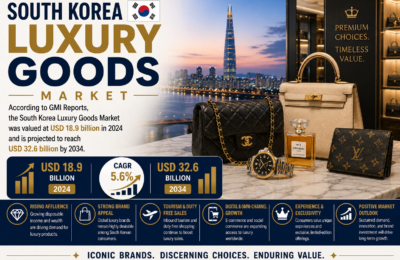
The South Korea luxury goods market was valued at USD 18.9 billion in 2024 and is projected to grow at a compound annual growth rate (CAGR) of approximately 5.6%, reaching USD 32.6 billion by 2034, according to GMI Reports. South Korea has emerged as one of the world’s highest per-capita luxury goods consumption markets, reflecting the country’s substantial disposable income growth, deeply embedded social status consumption culture, and the global cultural influence of K-pop and Korean entertainment driving both domestic demand and international brand investment in the market.
South Korean consumers demonstrate exceptionally strong brand engagement with global luxury fashion, accessories, and beauty brands, supported by sophisticated department store luxury retail infrastructure concentrated within Seoul’s premier shopping districts. The market benefits from a notably younger luxury consumer demographic profile relative to many international peer markets, with significant luxury goods purchasing activity occurring among consumers in their twenties and thirties, a demographic pattern distinctly different from the more age-skewed luxury consumption observed in several Western markets.
South Korea’s luxury goods market additionally functions as a significant regional trendsetting market, with Korean celebrity brand ambassadorships and K-pop idol luxury brand partnerships generating substantial marketing value and influence extending well beyond domestic market boundaries into broader Asian luxury consumption trends. This cultural influence dynamic has elevated South Korea’s strategic importance within global luxury brand marketing and flagship store investment decisions.
Market Overview
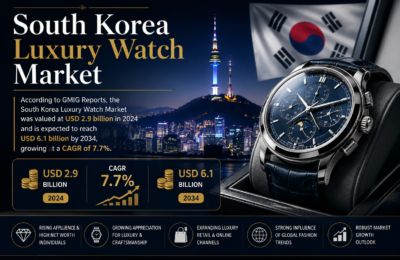
The South Korea luxury goods market encompasses luxury fashion apparel and accessories, premium beauty and fragrance products, fine jewelry and watches, and luxury leather goods sold through department stores, dedicated luxury brand flagship stores, duty-free retail, and increasingly significant e-commerce and resale market channels. The market serves a sophisticated, brand-conscious consumer base with distinctive demographic characteristics relative to many other major global luxury markets.
South Korean luxury consumption culture is significantly shaped by the country’s pronounced social status consciousness and appearance-oriented cultural norms, which have historically supported strong luxury goods demand as both personal indulgence and social signaling. This cultural foundation has been further amplified by the global rise of K-pop and Korean entertainment industry influence, with luxury brands increasingly recognizing Korean celebrity endorsement and brand ambassadorship as carrying outsized marketing value extending across broader Asian consumer markets beyond Korea’s domestic borders.
Seoul’s major department stores, concentrated within prestigious shopping districts, represent the traditional backbone of South Korea’s luxury retail infrastructure, hosting flagship and exclusive boutique locations for virtually every major global luxury brand. The market has additionally seen substantial growth in luxury resale and secondhand marketplace platforms, reflecting both sustainability-conscious consumer sentiment and continued strong luxury goods residual value retention supporting an active secondary market ecosystem.
Market Size & Forecast
Market Driving Factors
1. K-Pop and Korean Entertainment Cultural Influence
The global popularity of K-pop and Korean entertainment continues to drive substantial luxury brand marketing investment and endorsement partnership activity within South Korea, with Korean celebrity brand ambassadorships generating marketing value and consumer engagement extending well beyond domestic market boundaries. This cultural influence dynamic has elevated South Korea’s strategic positioning within global luxury brand marketing calendars and flagship retail investment prioritization.
2. Younger Demographic Luxury Consumption Pattern
South Korea exhibits a notably younger luxury consumer demographic profile relative to many international peer markets, with substantial luxury goods purchasing activity occurring among consumers in their twenties and thirties. This younger consumer engagement pattern, supported by social media-driven luxury brand awareness and aspiration, provides luxury brands with a distinctively long-term customer relationship development opportunity within the South Korean market.
3. Strong Social Status Consumption Culture
South Korea’s pronounced social status consciousness and appearance-oriented cultural norms continue to support robust luxury goods demand as both personal indulgence and social signaling, sustaining the country’s position as one of the world’s highest per-capita luxury consumption markets. This cultural foundation provides a structurally supportive demand environment relative to luxury markets more dependent on purely discretionary indulgence purchasing motivation.
4. Rising Disposable Income and Wealth Accumulation
Sustained South Korean economic growth and wealth accumulation, particularly within the country’s substantial professional and entrepreneurial class, continues to expand the population segment capable of sustained luxury goods purchasing engagement. This income growth foundation supports both first-time luxury purchase market expansion and increased purchase frequency among existing luxury consumers.
5. Department Store and Flagship Retail Infrastructure Investment
Continued substantial investment in premium department store luxury retail space and dedicated luxury brand flagship store development within Seoul’s major shopping districts provides global luxury brands with sophisticated retail infrastructure supporting premium brand experience delivery. This retail infrastructure investment reflects both domestic department store operator strategic prioritization and luxury brand confidence in the South Korean market’s long-term growth potential.
6. Growing Luxury Resale and Secondary Market Development
The expansion of luxury resale and secondhand marketplace platforms within South Korea reflects both growing sustainability-conscious consumer sentiment and continued strong luxury goods residual value retention. This secondary market development provides an additional luxury goods market access pathway, particularly appealing to younger and more price-conscious consumers seeking luxury brand engagement at reduced price points.
Market Restraining Factors
1. Macroeconomic Sensitivity and Consumer Confidence Fluctuation
Luxury goods purchasing, despite South Korea’s structurally supportive demand culture, remains sensitive to broader macroeconomic conditions and consumer confidence fluctuations, with periods of economic uncertainty or asset market volatility historically corresponding with moderated luxury spending growth pace among price-sensitive consumer segments at the margins of the core luxury consumer base.
2. Counterfeit Product Proliferation and Brand Protection Costs
The substantial popularity and brand recognition value of luxury goods within South Korea has unfortunately attracted significant counterfeit product proliferation, particularly within online marketplace and informal resale channels. This counterfeiting challenge poses brand reputation risks and necessitates ongoing brand protection investment from legitimate luxury manufacturers and authorized retail partners.
3. Market Maturity and Premium Price Resistance
South Korea’s luxury goods market exhibits considerable maturity within established product categories and core consumer demographics, with growing consumer price resistance to repeated luxury brand price increases gradually moderating purchase frequency growth among some previously highly engaged consumer segments. This maturity dynamic necessitates continued brand innovation and experiential differentiation to sustain premium pricing power and purchase frequency.
4. Demographic Decline Affecting Long-Term Consumer Base Growth
South Korea’s well-documented demographic challenges, including declining birth rates and population aging trends, present long-term structural considerations for the luxury goods market’s core younger consumer demographic base sustainability. While current younger demographic engagement remains strong, this demographic trend necessitates continued brand attention to evolving consumer base composition over the longer-term market planning horizon.
Market Segmentation
By Product Category
Fashion and apparel retains the leading product category market share, reflecting South Korean consumers’ strong engagement with global luxury fashion brands across both classic ready-to-wear and statement seasonal collection purchasing. Leather goods and accessories, including the handbag category, maintain substantial parallel market share, benefiting from these products’ relative accessibility entry point into luxury brand engagement and strong residual resale value supporting continued purchase confidence.
By Distribution Channel
Department stores remain the dominant distribution channel, reflecting their established position as the traditional center of South Korea’s luxury retail ecosystem and continued substantial brand investment in department store flagship presence. Online and e-commerce channels are exhibiting the fastest growth, supported by luxury brands’ increasing direct e-commerce investment and growing consumer comfort with online luxury purchasing for established brand relationships.
By Consumer Demographic
Competitive Landscape
The South Korea luxury goods market features intense competition among major global luxury conglomerates and independent maisons, each maintaining substantial flagship retail presence and Korean celebrity brand ambassador relationships. Competitive differentiation increasingly centers on K-pop and entertainment industry partnership strategy, exclusive collection availability, and digital and social media engagement sophistication.
Regional Analysis (Within South Korea)
Luxury goods consumption within South Korea exhibits substantial concentration in the Seoul Capital Area, reflecting both population density and the geographic clustering of premier department store and flagship retail infrastructure. Secondary metropolitan centers and duty-free retail locations contribute meaningfully to overall market demand.
Emerging Market Trends
K-Pop Idol Global Brand Ambassador Strategy Intensification
Luxury brands continue to intensify K-pop idol and Korean celebrity global brand ambassador partnership strategies, recognizing these partnerships’ substantial marketing value and engagement reach extending across broader Asian and global luxury consumer audiences well beyond South Korea’s domestic market. This trend has elevated South Korean celebrity endorsement deals to globally significant luxury marketing investment priorities.
Experiential Retail and Flagship Store Innovation
Major luxury brands continue to invest in increasingly elaborate and experiential flagship store concepts within Seoul’s premier shopping districts, incorporating exhibition spaces, exclusive product collaborations, and immersive brand experience elements designed to generate social media engagement and reinforce brand prestige positioning beyond traditional retail transaction functionality.
Luxury Resale and Sustainability-Conscious Consumption Growth
Growing South Korean consumer interest in luxury resale platforms and sustainability-conscious consumption patterns is supporting continued secondary luxury market development, providing both environmental positioning value and expanded luxury brand access pathways for price-conscious or first-time luxury consumers seeking authenticated pre-owned products.
Personalization and Exclusive Collaboration Product Strategy
Luxury brands are increasingly developing Korea-exclusive product collaborations, limited edition releases, and personalization service offerings specifically tailored to South Korean consumer preferences, recognizing the market’s sophisticated brand engagement and willingness to pay premium pricing for genuinely differentiated and exclusive product access.
Digital and Live Commerce Integration Expansion
Luxury brands continue to expand digital marketing sophistication and live commerce integration within South Korea, leveraging the country’s advanced social commerce infrastructure to drive both online luxury purchasing conversion and broader brand engagement among digitally-native younger consumer demographics increasingly comfortable with luxury goods online purchasing.
Key Companies in the South Korea Luxury Goods Market
-
LVMH Moët Hennessy Louis Vuitton
-
Chanel S.A.
-
Hermès International
-
Kering S.A. (Gucci, Saint Laurent, Balenciaga)
-
Richemont (Cartier, Van Cleef & Arpels)
-
Estée Lauder Companies
-
Shinsegae International
-
Lotte Department Store
-
Hyundai Department Store
-
Prada Group
-
Other Global Luxury Maisons
Report Target Audience
-
Luxury Fashion, Beauty, and Accessories Brands
-
Department Store and Retail Group Operators
-
Investment and Private Equity Firms
-
Brand Marketing and Celebrity Partnership Agencies
-
E-commerce and Luxury Resale Platform Operators
-
Duty-Free and Travel Retail Operators
-
Management and Strategy Consultants
-
Academic Researchers in Consumer Behavior and Luxury Marketing
Market Segmentation Summary
By Product Category
-
Fashion & Apparel
-
Beauty & Fragrance
-
Leather Goods & Accessories
-
Fine Jewelry & Watches
By Distribution Channel
-
Department Stores
-
Dedicated Luxury Flagship Stores
-
Online/E-commerce
-
Duty-Free Retail
-
Resale & Secondary Market
By Consumer Demographic
-
Millennials & Gen Z (20s-30s)
-
Gen X (40s-50s)
-
Baby Boomers (60+)
By Region (Within South Korea)
-
Seoul Capital Area
-
Busan
-
Incheon (Airport/Duty-Free)
-
Daegu & Gyeongbuk
-
Other Regions
About GMI Reports
GMI Reports is a premier market intelligence and research organization providing data-driven insights and strategic analysis across global luxury, retail, and consumer goods markets. Our research empowers brands, retailers, and investors to navigate the evolving luxury goods landscape with confidence. For the South Korea Luxury Goods Market report and related research, visit www.gmigreports.com or contact our research team for customized intelligence solutions.
www.gmigreports.com