MARKET RESEARCH REPORT
Androgens and Anabolic Steroids Market
Global Insights, Analysis & Forecasts to 2034
Published by GMI Reports | www.gmigreports.com
Executive Summary
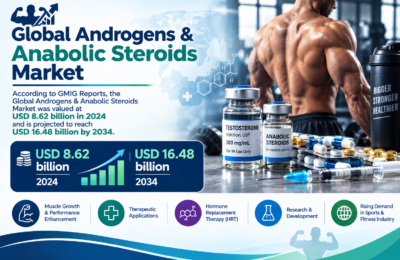
The global androgens and anabolic steroids market was valued at USD 8.62 billion in 2024 and is projected to grow at a compound annual growth rate (CAGR) of approximately 6.7%, reaching USD 16.48 billion by 2034, according to GMI Reports. This market encompasses the pharmaceutical development, manufacturing, and clinical dispensing of androgen and anabolic steroid drugs prescribed for legitimate medical indications including male hypogonadism, delayed puberty, female breast cancer, anemia, cachexia, osteoporosis in postmenopausal women, gender-affirming hormone therapy, and muscle-wasting conditions associated with chronic disease states.
The market is predominantly driven by testosterone replacement therapy for male hypogonadism, which represents the largest and fastest-growing therapeutic segment. The global prevalence of hypogonadism — estimated to affect approximately 40% of men over 45 years of age — combined with growing clinical awareness and reduced diagnostic stigma, is generating substantial and sustained prescription volume growth across North America, Europe, and increasingly Asia Pacific markets. Novel drug delivery system innovation, including long-acting injectable formulations, transdermal gel and patch systems, and nasal testosterone formulations, has significantly expanded the treatable patient population by improving adherence and tolerability relative to older short-acting intramuscular injection formats.
The anabolic steroid segment, prescribed for cachexia management in HIV/AIDS, cancer, chronic obstructive pulmonary disease, and severe burn patients, alongside specific hematological indications including aplastic anemia and hereditary angioedema, represents a clinically important complement to the larger testosterone replacement therapy market. Growing recognition of anabolic steroid therapy’s role in preserving lean body mass and functional capacity in severe chronic disease states is supporting clinical adoption across oncology, pulmonology, and geriatric medicine specialties.
Market Overview
The global androgens and anabolic steroids pharmaceutical market encompasses testosterone and its ester derivatives (testosterone cypionate, testosterone enanthate, testosterone undecanoate), synthetic androgen compounds (methyltestosterone, fluoxymesterone), synthetic anabolic steroid compounds (oxandrolone, nandrolone, stanozolol, oxymetholone), and dihydrotestosterone preparations prescribed across a range of approved clinical indications by licensed healthcare providers and dispensed through regulated pharmacy channels.
Testosterone replacement therapy constitutes the dominant market segment, with the US representing the world’s largest national market given its high hypogonadism diagnosis rates, active physician prescribing culture, direct-to-consumer advertising of branded testosterone products, and a well-established clinical framework supporting testosterone therapy monitoring and management. European markets exhibit more conservative prescribing patterns reflecting different clinical guideline frameworks and reimbursement dynamics, while Asia Pacific represents a significantly under-diagnosed and under-treated market relative to its population scale.
The regulatory landscape governing androgen and anabolic steroid pharmaceuticals is highly structured, with these compounds classified as Schedule III controlled substances in the United States under the Anabolic Steroid Control Act, requiring DEA registration for prescribing and dispensing, and subject to equivalent controlled drug regulatory frameworks in most major markets. This regulatory classification supports prescription-channel market integrity while creating compliance infrastructure requirements that favour established pharmaceutical manufacturers over potential new market entrants.
Market Size & Forecast
Market Driving Factors
1. Rising Global Hypogonadism Prevalence and Diagnosis Growth
The rising global prevalence of male hypogonadism driven by population aging, increasing obesity and metabolic syndrome rates, and type 2 diabetes — all significantly associated with testosterone deficiency — is generating substantial and sustained testosterone replacement therapy prescription growth. Simultaneously, growing physician and endocrinologist awareness of hypogonadism’s systemic health consequences, including cardiovascular risk, bone density loss, and quality of life impairment, is supporting improved diagnosis rates among previously under-identified symptomatic patient populations.
2. Novel Drug Delivery System Innovation Improving Patient Adherence
Continued pharmaceutical innovation in testosterone delivery systems, including once-monthly injectable long-acting testosterone undecanoate formulations, daily transdermal gel and patch systems, twice-daily nasal testosterone gel enabling avoidance of skin transfer concerns, and subcutaneous pellet implant formulations providing three-to-six-month dosing intervals, has significantly expanded the testosterone therapy accessible patient population by offering administration format options matching diverse patient lifestyle and preference profiles. This delivery system diversification has meaningfully improved patient adherence and persistence relative to frequent intramuscular injection regimens.
3. Growing Gender-Affirming Hormone Therapy Demand
Substantial and growing demand for testosterone therapy within gender-affirming hormone therapy programs for transgender men and non-binary individuals assigned female at birth represents one of the most significant growth vectors within the broader androgen market. Expanding gender-affirming care program availability, growing primary care physician capability for gender-affirming hormone therapy initiation and management, and increasing insurance reimbursement coverage are collectively driving meaningful prescription volume growth within this patient population across North America and Europe.
4. Cancer Cachexia and Muscle Wasting Indication Expansion
Growing clinical evidence supporting anabolic steroid therapy’s role in preserving lean body mass, functional capacity, and quality of life in cancer cachexia, HIV-associated wasting, severe COPD, and other chronic disease-associated muscle-wasting conditions is driving expanding physician consideration of anabolic steroid therapy within oncology, pulmonology, and HIV medicine specialty practices. Oxandrolone and nandrolone have achieved particular clinical traction within these severe chronic disease indication categories.
5. Aging Male Population and Men’s Health Investment Growth
Global demographic aging, with rapidly expanding older male population segments in North America, Europe, Japan, and South Korea, combined with growing consumer investment in men’s health optimization and longevity, is supporting sustained testosterone replacement therapy prescription growth. The broader men’s health movement’s growing cultural prominence and destigmatization of testosterone deficiency treatment is reducing patient-level barriers to seeking medical evaluation and initiating therapy.
6. Generic Market Expansion Improving Therapy Accessibility
Substantial expansion of generic testosterone and anabolic steroid product availability, following patent expiration of several branded testosterone formulations, has improved therapy affordability and insurance formulary access, expanding the treated patient population beyond those able to afford branded product pricing. Generic market penetration has been particularly significant for testosterone cypionate and enanthate injectable formulations, the most commonly prescribed testosterone replacement therapy formats within US primary care and endocrinology practices.
Market Restraining Factors
1. Stringent Controlled Substance Regulatory Framework
Androgen and anabolic steroid pharmaceuticals’ Schedule III controlled substance classification under US DEA regulation and equivalent controlled drug scheduling in most major international markets imposes meaningful prescribing registration, documentation, dispensing record, and inventory control requirements that add administrative burden to clinical prescribing workflows. These regulatory compliance requirements can moderate prescribing momentum, particularly among primary care physicians less familiar with controlled substance prescribing protocols.
2. Cardiovascular Safety Concerns and Clinical Guideline Conservatism
Ongoing clinical debate regarding testosterone replacement therapy’s cardiovascular safety, including studies reporting mixed findings on therapy’s effect on major adverse cardiovascular events in older hypogonadal men with cardiovascular risk factors, has contributed to clinical guideline conservatism in some markets that moderates prescribing growth below the underlying patient need level. Clinician hesitancy regarding cardiovascular risk in older higher-risk patient populations represents a meaningful prescribing constraint within certain physician specialty communities.
3. Reimbursement Restrictions and Formulary Access Barriers
Insurance coverage and reimbursement access for testosterone replacement therapy varies significantly across payer types and geographic markets, with some insurance plans imposing prior authorization requirements, lab result documentation thresholds, or formulary restrictions limiting patient access to preferred therapy formulations. These coverage restrictions can reduce therapy initiation and adherence rates among patients deterred by out-of-pocket cost exposure for non-covered formulations or compliance burden of prior authorization requirements.
4. Abuse Potential Stigma and Market Perception Challenges
Legitimate therapeutic androgen and anabolic steroid markets contend with reputational stigma associated with non-medical anabolic steroid misuse in athletic and body composition contexts, which can influence physician prescribing hesitancy, patient disclosure reluctance, and pharmacy handling practices in ways that moderately constrain the legitimate therapeutic market’s development relative to the genuine clinical need size among diagnosed hypogonadal and other indication-appropriate patient populations.
Market Segmentation
By Drug Type
Testosterone formulations retain the dominant and expanding market share, reflecting their broad clinical indication coverage spanning hypogonadism, gender-affirming therapy, and delayed puberty treatment, alongside the substantial prescription volume generated by the expanding hypogonadism diagnosis and treatment market globally. Oxandrolone maintains significant market presence driven by its established clinical use in pediatric short stature, HIV-associated wasting, severe burn recovery, and cancer cachexia indications.
By Route of Administration
Injectable testosterone formulations retain the globally dominant route of administration market share, reflecting their cost-effectiveness, physician familiarity, and the availability of long-acting once-monthly injectable options. Transdermal gel formulations represent the dominant format within the US market specifically, reflecting the direct-to-consumer advertised branded product landscape and patient preference for self-administration without injection. Nasal and novel route formulations are the fastest-growing segment.
By Indication
Competitive Landscape
The global androgens and anabolic steroids pharmaceutical market features a combination of major pharmaceutical companies with significant branded testosterone replacement therapy product portfolios, generic pharmaceutical manufacturers providing substantial market volume through cost-effective formulation supply, and specialty pharmaceutical companies developing novel delivery system platforms. Competitive differentiation centers on delivery system innovation, clinical data differentiation, and payer reimbursement access management.
Regional Analysis
North America represents the world’s largest androgens and anabolic steroids market by a substantial margin, reflecting the United States’ high hypogonadism diagnosis rates, direct-to-consumer pharmaceutical advertising environment, active branded testosterone product marketing investment, and relatively permissive prescribing culture relative to European peers. Europe and Asia Pacific represent significant secondary markets with meaningful growth potential from current under-diagnosis levels.
Emerging Market Trends
Testosterone Therapy for Cardiometabolic Risk Management
Growing clinical evidence from large randomized controlled trials, including the TRAVERSE trial, demonstrating testosterone therapy’s favorable effects on metabolic parameters, body composition, bone mineral density, and sexual function in hypogonadal men is progressively supporting broader clinical confidence in therapy initiation across wider patient risk profiles. This evidence base expansion is supporting guideline updates that may expand the recommended treatment population and support reimbursement access improvements.
Subcutaneous Testosterone Injection Platform Growth
The commercial growth of subcutaneous testosterone injection formulations, enabling patient self-administration via small-gauge needle injection into subcutaneous adipose tissue at weekly or biweekly intervals, represents a significant delivery system advancement improving upon conventional intramuscular injection discomfort and enabling consistent patient self-management. XYOSTED and compounded subcutaneous testosterone cypionate have demonstrated strong prescription growth within the US market among patients seeking self-injection convenience.
Telehealth-Enabled TRT Prescribing and Men’s Health Platform Growth
The rapid expansion of telehealth-based men’s health platforms providing convenient online testosterone deficiency symptom assessment, laboratory testing facilitation, and remote testosterone replacement therapy prescribing and medication delivery has substantially lowered barriers to therapy initiation among men previously deterred by traditional in-person endocrinology or urology referral pathway requirements. Platforms including Hims, Roman, BodyLogicMD, and Defy Medical have generated significant incremental TRT prescription volume within the US market.
Biosimilar and Generic Competition Intensification
Continued expansion of generic testosterone formulation availability and intensifying price competition within the generic injectable testosterone market segment is improving therapy affordability and insurance formulary access while compressing branded product market share and pricing power. Branded testosterone manufacturers are responding through innovation pipeline investment in novel delivery systems, combination products, and expanded clinical data packages supporting differentiated prescribing rationale maintenance.
Female Testosterone Therapy and Women’s Health Indication Development
Growing clinical and regulatory interest in testosterone therapy for specific female indications, including hypoactive sexual desire disorder in postmenopausal women, is creating potential new market expansion opportunity beyond the predominantly male therapy market. Several pharmaceutical companies are advancing clinical development programs for female-dose testosterone formulations, and growing endocrinologist and gynecologist engagement with female testosterone therapy evidence is building a developing prescribing community for this emerging indication category.
Key Companies in the Androgens and Anabolic Steroids Market
-
AbbVie Inc. (AndroGel, Testim)
-
Endo International (Fortesta, Aveed)
-
Antares Pharma / Halozyme (XYOSTED)
-
Acerus Pharmaceuticals (Natesto)
-
Pfizer Inc. (Depo-Testosterone)
-
Noven Pharmaceuticals / Hisamitsu
-
Cipla Limited
-
Sun Pharmaceutical Industries
-
Teva Pharmaceutical Industries
-
Hikma Pharmaceuticals
-
Multiple Generic Testosterone Manufacturers
Report Target Audience
-
Pharmaceutical Manufacturers and Brand Owners
-
Generic Drug Manufacturers
-
Endocrinologists, Urologists, and Men’s Health Specialists
-
Investment and Private Equity Firms
-
Healthcare Payers and Insurance Companies
-
Drug Regulatory Affairs Professionals
-
Management and Strategy Consultants
-
Academic Researchers in Endocrinology and Andrology
Market Segmentation Summary
By Drug Type
-
Testosterone (All Formulations)
-
Oxandrolone
-
Nandrolone
-
Oxymetholone & Other Anabolic Steroids
By Route of Administration
-
Injectable (Intramuscular & Subcutaneous)
-
Transdermal Gel & Patch
-
Oral
-
Nasal & Other Routes
By Indication
-
Male Hypogonadism (Testosterone Replacement Therapy)
-
Gender-Affirming Hormone Therapy
-
Cachexia & Muscle Wasting
-
Anemia (Aplastic, Chronic Disease)
-
Delayed Puberty & Other
By Region
-
North America
-
Europe
-
Asia Pacific
-
Latin America
-
Middle East & Africa
About GMI Reports
GMI Reports is a premier market intelligence and research organization providing data-driven insights and strategic analysis across global pharmaceutical, biotechnology, and healthcare markets. Our research covers prescription drug markets across all major therapeutic areas and geographies, empowering pharmaceutical companies, investors, and healthcare stakeholders to navigate evolving market dynamics with confidence. For the Androgens and Anabolic Steroids Market report and related research, visit www.gmigreports.com or contact our research team for customized intelligence solutions.
www.gmigreports.com